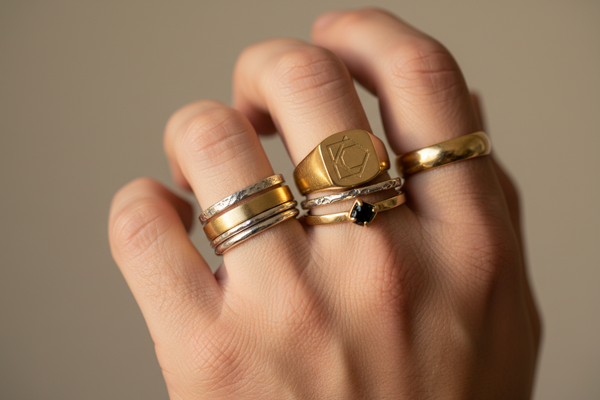
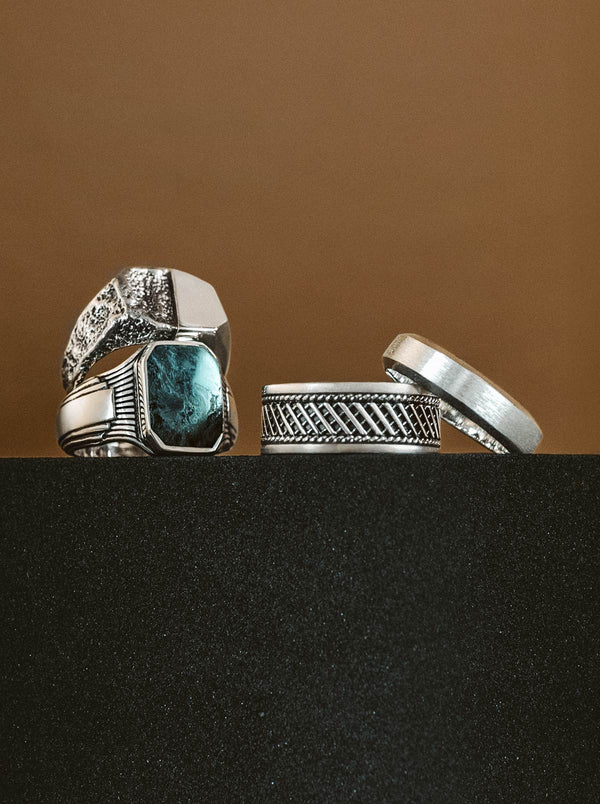
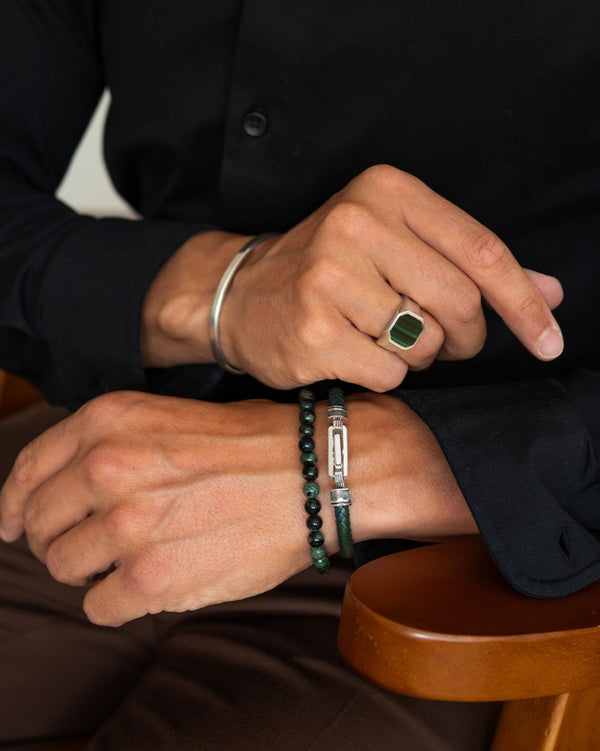
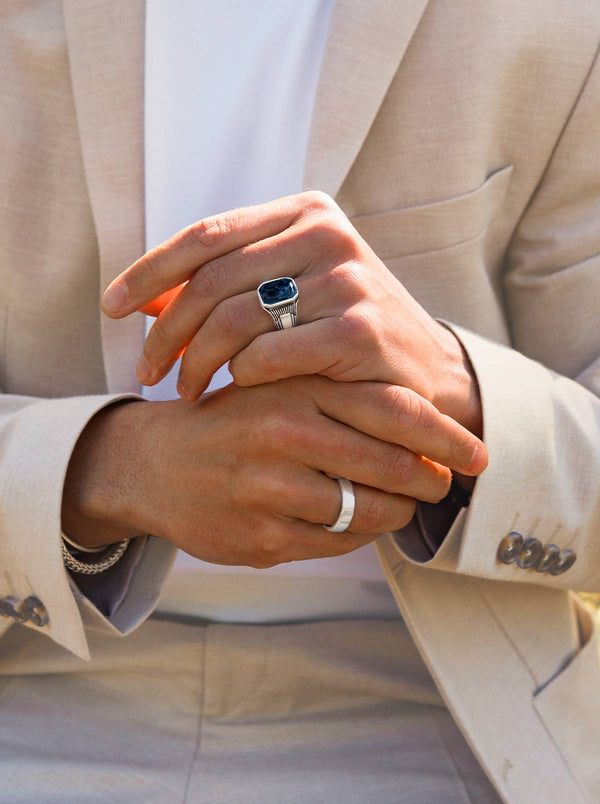
Wearing a signet ring on the little finger is the most traditional placement for men. Historically associated with family crests, heraldry, and social standing, the left pinky has been the classic choice across British and European culture for centuries. Today it remains a meaningful, stylish option — equally suited to heritage pieces and contemporary sterling silver designs.
Of all the fingers, the little finger has the longest and most storied relationship with the signet ring. From aristocratic seal rings pressed into wax to the understated pinky rings of modern menswear, wearing a signet ring on the little finger has carried more meaning than any other placement. If you are considering a signet ring on the little finger, this guide covers everything you need to know, from the history behind the tradition to how to get the fit and style exactly right.
What Does a Signet Ring on the Little Finger Mean?
The little finger is where the signet ring story begins. Long before rings became a fashion choice, they were functional objects, and wearing a signet ring on the little finger was the most practical arrangement available. Over centuries, the meaning layered up around that practicality until a signet ring on the little finger became shorthand for heritage, identity, and lineage.
The History Behind the Little Finger
The connection between signet rings and the little finger goes back to ancient civilisations, but it took on its most recognisable form in medieval and Renaissance Europe. Signet rings were used to press a wax seal onto correspondence and documents, acting as a personal signature. Wearing the ring on the little finger made it easy to remove, press, and replace without removing gloves or disrupting other rings.

In British aristocratic tradition, the signet ring was worn on the left little finger, often stacked above a wedding band. It represented family lineage, coat of arms, and social position. Figures including Winston Churchill and members of the British royal family wore their signet rings on the left pinky, cementing the association between that placement and a certain kind of understated authority.
See more: The History of the Signet Ring
What the Little Finger Represents Today
The strict class associations of the pinky signet ring have softened considerably. What remains is a sense of intention. Choosing to wear a signet ring on the little finger today still signals that you have thought about what you are wearing and why. It reads as considered rather than casual, traditional rather than trend-led. For men who value heritage and craft in their accessories, a signet ring on the little finger remains the natural choice.
Left Pinky or Right Pinky: Does It Matter?
Whether you wear a signet ring on the little finger of the left hand or the right is less about rigid rules and more about which convention resonates with you. Both hands carry meaning, but those meanings come from different traditions. Understanding the difference helps you make a more informed decision about your own signet ring on the little finger.

In most British and European traditions, the left pinky is the recognised placement for a family signet ring. The right pinky tends to be associated with professional rings and personal achievement rather than inherited status. If you are not following a family tradition, either hand suits a signet ring on the little finger equally well. Choose based on which feels more natural to wear daily.
How to Wear a Signet Ring on the Little Finger
Wearing a signet ring on the little finger comes with specific considerations around sizing and proportion that do not apply to larger fingers. Getting these right from the start makes the difference between a ring that looks deliberate and one that looks misplaced.
Getting the Right Size for Your Little Finger
The most common mistake when ordering a signet ring for the little finger is relying on a ring size measured from another finger. The little finger is typically two to three sizes smaller than the ring finger on the same hand. If you order a signet ring on the little finger without measuring specifically, the ring will almost certainly be too large and will rotate or slip.
Measuring at home is straightforward. NineTwoFive offers Ring Size Tools to help you get an accurate measurement for any finger before you order.

Choosing the Right Ring Style for the Pinky
Proportion matters on a smaller finger. A ring face that works well on the index or middle finger can look oversized and clumsy on the little finger. As a general rule, small to medium face sizes suit the pinky best. A classic oval face in sterling silver is one of the most balanced choices, sitting flat without dominating the finger.
Band width is equally important. A slim to medium band keeps the ring from overwhelming a smaller finger. Very wide bands tend to shorten the visual length of the finger, which is worth avoiding on the pinky. If you want a bold look, let the face size do the work rather than the band width.
Browse the full range of face shapes and sizes at Men's Signet Rings — all crafted in solid 925 sterling silver.
Engraving a Signet Ring You Plan to Wear on the Little Finger
Engraving and the little finger have been paired for longer than any other combination in the history of men's rings. A signet ring on the little finger was originally defined entirely by what was engraved on its face — the seal was the whole point. Even today, choosing what to engrave on a signet ring on the little finger is worth thinking about carefully, because the placement carries that history with it.
Traditional Engraving Choices for the Pinky
The most historically resonant choices for a little finger signet ring are those rooted in family identity. A coat of arms, a family crest, or a heraldic monogram connects the ring to the tradition it comes from. If your family has a crest, wearing it on the left pinky is exactly the placement it was designed for. If not, a set of initials in a serif or block typeface carries a similar sense of considered formality.
Modern Engraving Ideas for a Little Finger Signet Ring
For those not following a family tradition, the little finger signet ring is a blank canvas with a rich frame. A meaningful date, a single initial, a geometric symbol, or a short word engraved on the face all work well. The key is choosing something with personal weight rather than something decorative. The pinky has always been about identity, and a thoughtful engraving honours that history.
All NineTwoFive signet rings include free laser engraving. Explore Men's Engraved Rings to see the full range of engravable styles.
See more: Signet Ring Engraving Ideas

Stacking and Styling: Wearing Other Rings Alongside Your Signet
A signet ring on the little finger is a more challenging placement to stack than the index or middle, largely because of the smaller size of the finger. That said, a signet ring on the little finger does not have to sit in complete isolation. The key is understanding how it interacts with rings on adjacent fingers.
Can You Stack Rings on the Little Finger?
Technically, yes, but it is rarely the right approach. The little finger is small enough that two rings sitting on it can feel crowded and uncomfortable. In most cases, the signet ring works best worn alone on the pinky, with any additional rings placed on other fingers. A single slim band on the ring finger or a complementary ring on the index finger creates a layered look without putting pressure on the smaller finger.
If you are building a considered set of rings, Men's Silver Rings offers a range of styles designed to work together across the hand.
See more: Men's Rings: Meaning by Finger
How to Balance a Pinky Ring with Other Jewellery
A signet ring on the little finger already makes a clear statement, so the rest of your hand jewellery should complement rather than compete. Slim bands in the same metal work well. Avoid wearing rings on every finger of the same hand, as this diminishes the impact of the signet ring. One or two additional rings on the same hand, chosen thoughtfully, is the right balance.

FAQ: Signet Ring on the Little Finger
Why is the little finger the traditional placement for a signet ring?
Wearing a signet ring on the little finger made it easy to remove and press into wax for sealing documents. Over time, this practical habit became a symbol of family heritage and social status.
Should a signet ring on the little finger be worn on the left or right hand?
In British and European tradition, the left pinky is the conventional choice for a family signet ring on the little finger. The right pinky is more common in North American traditions. Either is acceptable for a personal style choice.
What size should I order for my little finger?
The little finger is typically two to three sizes smaller than your ring finger. Always measure the little finger specifically rather than estimating from another finger to ensure your signet ring fits properly.
What ring face size suits a signet ring on the little finger?
Small to medium face sizes work best. A face that is too large will overpower the smaller finger. Classic oval and cushion shapes are the most flattering choices for a signet ring on the little finger.
Can I wear other rings alongside a signet ring on my little finger?
It is possible but generally best avoided on the same finger. Wearing the signet ring alone on the pinky and placing additional rings on other fingers keeps the look balanced and comfortable.
Final Thoughts
The little finger has carried signet rings for longer than any other. Whether you are drawn to the tradition behind it or simply want a placement that feels considered and intentional, the pinky remains one of the strongest choices you can make. Get the size right, choose a face that suits the finger, and engrave it with something that means something. Explore our full collection of Men's Signet Rings — crafted in solid 925 sterling silver, with free laser engraving on every piece.