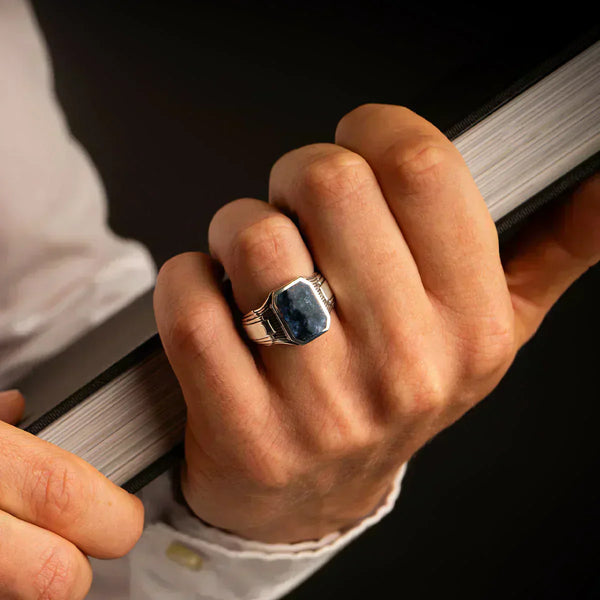
Making silver rings involves designing, casting or handcrafting the band, shaping, soldering, filing, and polishing. High-quality rings are made from solid 925 sterling silver, with the finishing process requiring the most skilled craftsmanship. Understanding how silver rings are made helps you recognize quality and appreciate the craftsmanship behind a piece built to last.

What Silver Rings Are Actually Made From
Before getting into how silver rings are made, it helps to understand the material itself. The way a ring behaves over time - how it tarnishes, holds its shape, and takes a polish - is determined by the composition of the metal chosen for it.
925 sterling silver is the standard for quality jewellery rings and the material behind every piece NineTwoFive produces. The name comes from the composition: 92.5% pure silver combined with 7.5% other metals, almost always copper. Pure silver at 999 fineness is too soft for rings - it scratches easily, bends under moderate pressure, and would lose its shape within months of daily wear. The copper addition strengthens the alloy without affecting its appearance or tarnishing behaviour, giving the metal the durability a ring needs to handle gym sessions, office work, and everything in between.
The hallmark stamped inside the band confirms the composition. A "925" or "Sterling" mark is the industry-standard indicator of solid sterling silver. Silver-plated rings carry no such stamp, or may show "EP" or "EPNS," indicating a base metal coated with a thin layer of silver. The difference is fundamental: a solid 925 ring is the same material all the way through and can be polished back to full brightness indefinitely. A plated ring will eventually wear through to the base metal, and no amount of polishing will restore what has been lost.

How Silver Rings Are Designed
The design stage determines everything that follows in making silver rings. Proportions, band width, surface profile, and any decorative detail are decided before a silversmith touches the metal. A well-considered design accounts for both aesthetic intention and the reality of how the metal will behave during production and across years of wear.
From Sketch to Technical Drawing
Every quality ring begins with a hand-drawn sketch. This initial stage forces the designer to commit to proportions and profile before any commitment to material. At NineTwoFive, every piece starts as a sketch drawn in the Netherlands studio, guided by the principles of architectural design: clean lines, geometric balance, and precise structure. Architecture-inspired jewellery is not just a style description - it is a design method that treats each ring as a small constructed form, where proportion and weight must work in three dimensions, not just visually. The sketch is then refined into a technical drawing that specifies the exact dimensions the silversmith will work to.
CAD and 3D Modelling
The technical drawing is converted into a three-dimensional model using CAD software. This stage allows the designer to examine the ring from every angle, check wall thicknesses, identify structural weak points, and produce a render of what the finished piece will look like before any metal is used. The CAD file also provides the instruction set for the casting process, ensuring the ring that emerges from the mould matches the design precisely. The combination of hand-drawn origin and digital precision is what allows a design concept to be executed consistently without losing the character that made it worth making in the first place.
Two Ways to Make a Silver Ring: Casting vs. Hand Fabrication
Once the design is finalised, the silversmith has two main routes to bring it into physical form. Understanding these routes is central to understanding how to make silver rings that are both beautiful and durable. The method chosen depends on the complexity of the design, the volume being produced, and the characteristics the finished ring needs.

Lost wax casting suits complex three-dimensional designs that would be difficult to achieve by shaping sheet metal alone. Hand fabrication suits simpler bands and bespoke one-off pieces where the silversmith builds the ring directly from wire or strip. Most quality production rings use casting for the primary form, followed by extensive hand finishing, combining the precision of the former with the care of the latter.
Lost Wax Casting: How It Works
Lost wax casting is the dominant technique for making silver rings at scale without sacrificing design integrity. A wax model of the ring is first created, either carved by hand or produced from a 3D-printed resin prototype derived from the CAD file. Multiple wax models are attached to a central wax rod, known as the sprue or wax tree, which becomes the delivery channel for molten metal. The tree is encased in a plaster investment mould and placed in a kiln. The heat burns away the wax entirely, leaving a hollow cavity in the exact shape of the ring. Molten 925 sterling silver is then poured or centrifugally cast into the cavity, filling every detail. Once cooled, the mould is broken away, the ring is cut from the sprue, and the real work of finishing begins.
Hand Fabrication: Working the Metal Directly
In hand fabrication, the silversmith starts with a strip or piece of sterling silver and works it into a ring using tools alone: a mandrel to create the round form, files to shape the ends, and a torch and solder to join the seam. The strip is annealed first - heated and quenched to soften the metal - which makes it workable without cracking. The silversmith brings the two ends together to form a flush butt joint and solders them with precision. The quality of the finished ring depends entirely on the skill of the maker: the evenness of the form, the cleanliness of the join, and the consistency of the surface all reflect years of practice with the material.

The Role of the Silversmith
The word handmade appears across a wide range of jewellery but means different things in different contexts. Understanding what a silversmith actually does helps buyers distinguish genuine handcraft from marketing language applied to machine-produced pieces.
A skilled silversmith controls heat, pressure, and timing simultaneously, making continuous judgements based on how the metal behaves in front of them. The moment solder flows, the pressure needed to shape a band without distortion, the correct grit sequence to remove a scratch cleanly: none of these steps can be fully automated without compromising the result.
At NineTwoFive, Balinese artisans with years of silversmithing experience shape and finish each ring by hand, working from designs developed in the Netherlands studio. Every piece carries the precision of architectural design and the character that only comes from someone who has learned to read the metal.
For a full guide to understanding silver rings for men, including material quality, design styles, and what to look for when buying, see our Silver Ring for Men Guide.
Shaping, Soldering, and Filing
Whether a ring has been cast or hand-fabricated, the work between raw form and finished piece follows the same sequence of operations. This intermediate stage is where structural integrity is confirmed and where the foundation for the final surface is prepared.

Shaping and Annealing
After casting, the ring is cleaned of investment residue and brought to its correct dimensions. Any distortion from the casting process is corrected on a mandrel. Before further work, the silver is annealed: heated with a torch to a specific temperature and then quenched, which relieves internal stress in the metal and makes it workable without cracking. A ring that skips this stage is brittle and prone to fracturing during any subsequent shaping or sizing. Annealing is one of those steps invisible in the finished piece but critical to everything that comes after it.
Soldering the Seam
For hand-fabricated rings, the solder join at the base of the band is the most important single step in the entire making process. Flux is applied to the join to prevent oxidation during heating. A small piece of silver solder is placed at the seam, and heat is applied to the band itself rather than to the solder directly. The metal must reach the correct temperature to draw the solder into the join by capillary action, filling the gap completely. A well-executed join is invisible after polishing and as strong as the surrounding metal. A poor join opens under stress, exactly when you least want it to. The quality of this step is the structural soul of the ring.
Filing and Removing Surface Imperfections
Once shaped and soldered, the ring is filed and abraded through progressively finer grades of abrasive. The process moves from coarser files that remove casting marks and roughness, through sandpaper from around 220 grit up to 1200 or finer, with each stage removing the scratches left by the previous one. This progressive refinement is what makes the final polish achievable: a polishing cloth applied to a surface that has not been properly filed simply highlights every remaining mark. The quality of the filing stage determines the quality of everything visible about the finished ring. Experienced silversmiths know this well, which is why finishing takes longer than any other part of making silver rings.
Setting Stones in Silver Rings
Stone-set silver rings require additional skill beyond the metalwork of the band. Stone setting is a distinct discipline within silversmithing, and the method used determines how secure the stone remains across years of daily wear and how the ring reads visually.
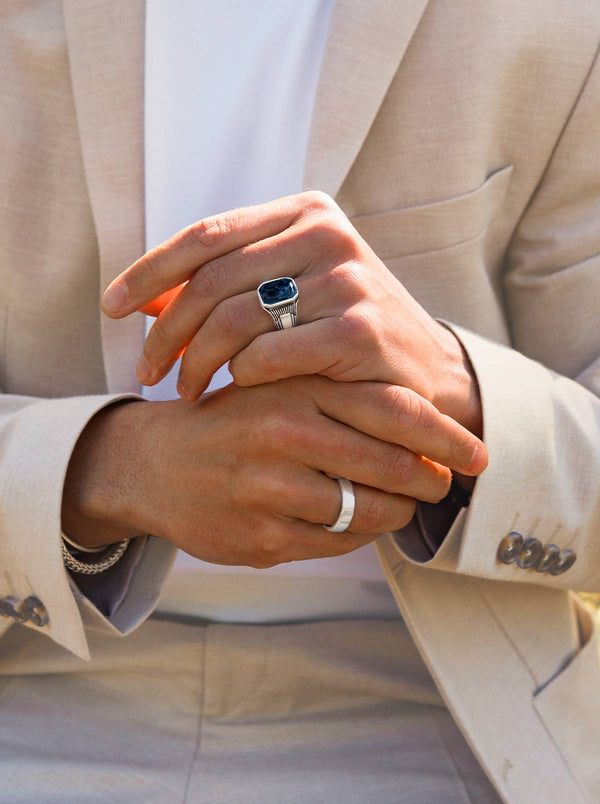
Bezel setting surrounds the stone with a continuous rim of silver that is pressed over the edge of the stone to hold it in place. It is the most protective setting for rings worn daily, as the stone is fully enclosed on all sides and resistant to catching or loosening. Prong setting uses small claws that grip the stone from above, allowing light through but leaving the stone more exposed. Flush or rubover setting seats the stone directly into the metal surface, producing a clean profile suited to architectural and minimal designs. Each setting type requires the silversmith to cut the silver seat to match the stone's exact dimensions before any pressure is applied. Set too loosely, the stone will move; set too tightly, it risks fracturing the stone or weakening the surrounding metal.
For more on how solid 925 silver behaves over time in contact with daily wear, including why tarnish is a mark of authenticity rather than a flaw, read our guide on Does Sterling Silver Tarnish?.
Shop now: Mens Signet Rings with Stone

Finishing: The Stage That Defines What You See and Feel
Finishing is the final sequence of operations that takes a ring from functionally complete to ready to wear. It is the most time-consuming stage of making silver rings, and the one that most directly determines the character of the finished piece.
Polishing to a Final Surface
The ring moves from fine-grade sandpaper through a series of progressively finer polishing compounds applied to a soft cloth or buffing wheel. The silversmith works across the entire surface with even pressure and consistent direction, removing the finest remaining scratches and building reflectivity progressively. The choice of final finish is made at this stage: mirror polish reflects the most light but shows subsequent scratches clearly; brushed or matte finish is more forgiving in daily wear and suits the architectural character of certain designs. Once the surface is complete, the ring is cleaned to remove compound residue before inspection.
Quality Control and Hallmarking
Before a ring leaves the workshop, it is inspected against the original design specification. The seam is checked for integrity, the stone is tested for security, and the surface is examined for consistency of finish across the whole ring. Any piece that does not meet standard goes back for reworking rather than being passed through. Rings made from solid 925 sterling silver are then stamped with the 925 hallmark inside the band. This stamp is not decorative - it is a permanent, verifiable indicator of the material used throughout the ring, and the marker buyers should look for above any other.
What the Making Process Means for the Ring You Wear
Understanding how silver rings are made changes what to look for when choosing one. Every visible quality indicator corresponds directly to a stage in the making process, and knowing which stage produced it gives a buyer a clear framework for assessment.

Each point in the checklist reflects a specific stage: the hallmark confirms material at the source; the seam quality reflects the soldering stage; the surface consistency reflects the filing and polishing work; and the stone security reflects the precision of the setting. A ring that scores well across all six points has been made with care at every stage, not just the stages you can easily see.
For a full guide to the main styles available in men's sterling silver, from plain bands to signet rings and stone-set designs, read our Types of Men's Rings.

Frequently Asked Questions
How are silver rings made?
Making silver rings involves designing the piece, producing the form through casting or hand fabrication, shaping and soldering the band, filing and abrading through progressive grits to prepare the surface, and polishing to a final finish. Stone-set rings include an additional stage of setting the stone precisely into the silver before finishing.
What is 925 sterling silver and why is it used for rings?
925 sterling silver is an alloy of 92.5% pure silver and 7.5% copper. Pure silver is too soft for rings worn daily, as it bends and scratches easily. The copper addition strengthens the metal without affecting its appearance, making it suitable for pieces that need to withstand everyday contact, movement, and wear.
What is the difference between casting and hand fabrication in silver ring making?
Lost wax casting involves creating a wax model, encasing it in a mould, burning out the wax, and pouring molten silver into the resulting cavity. Hand fabrication involves shaping a strip or wire of silver directly into a ring using tools, files, and a solder join. Casting suits complex designs; fabrication suits simpler bands and bespoke pieces.
How long does it take to make a silver ring by hand?
A simple silver band made by hand fabrication takes an experienced silversmith several hours from start to finish, with filing and polishing accounting for the majority of that time. Complex cast designs with stone settings take longer, particularly when the stone requires careful fitting before being set securely into the silver.
How are stones set into silver rings?
The three main stone setting methods used in silver rings are bezel setting, which surrounds the stone with a rim of silver; prong setting, which uses small claws to grip the stone from above; and flush setting, which seats the stone directly into the metal surface. Bezel setting is most common in men's rings worn daily because it offers the greatest protection.
What does the 925 hallmark mean on a silver ring?
The 925 hallmark stamped inside the band confirms that the ring is made from solid 925 sterling silver: 92.5% pure silver throughout the entire piece. It is the industry standard mark of material quality and is the most reliable single indicator a buyer can look for to confirm they are purchasing real sterling silver rather than a plated or base-metal alternative.
What is the difference between handmade and mass-produced silver rings?
Handmade silver rings involve a silversmith shaping, soldering, filing, and finishing each piece individually using hand tools. Mass-produced rings use stamping machines and automated polishing, producing pieces faster but with less individual attention to surface quality and structural integrity. Many quality production rings use a hybrid approach: cast forms finished by hand to preserve both consistency and craft.
How can I tell if a silver ring is well made before buying?
Check for the 925 hallmark inside the band, examine the seam at the base for smoothness, look at the surface for consistent finish without pitting or machine marks, and if the ring has a stone, check that it sits flush and does not move when pressed gently. A well-made ring will pass all of these points without exception.
Craft Is What You Wear Every Day
Silver rings that last are made with care at every stage, from the design that specifies the proportions to the filing that prepares the surface for its final polish. Knowing how silver rings are made does not make buying one more complicated. It makes it clearer. The hallmark, the seam, the surface consistency: these are visible evidence of everything that happened in the workshop before the ring reached your hand.
For more on the history and meaning behind the rings men choose to wear, read our guide to Men's Rings Meaning.
Shop now: Explore Men's Silver Rings