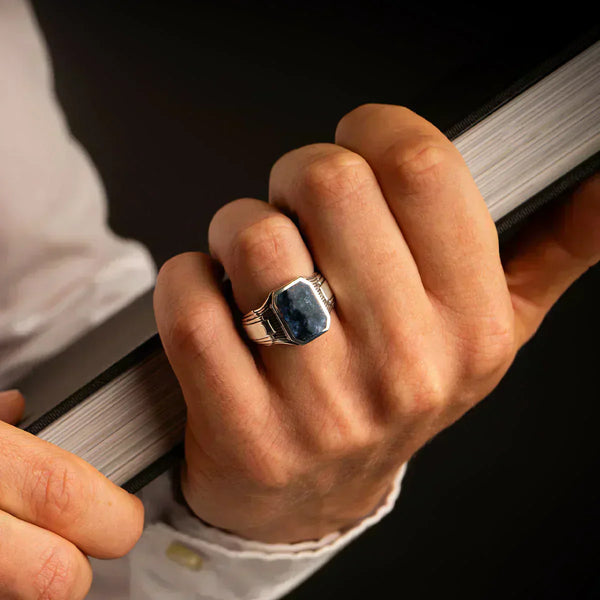
To polish silver rings at home, use a silver polishing cloth in straight back-and-forth strokes along the band, never in circles. The cloth removes surface dullness and light marks in one step. For heavier tarnish, clean the ring first with warm water and washing-up liquid, dry it completely, then follow with the cloth to restore the shine.
Knowing how to polish silver rings correctly, which tools to use, and how to handle engraved and signet designs keeps your ring looking exactly as it should, without causing damage in the process.

Polishing vs. Cleaning Silver Rings: What Is the Difference?
Before covering how to polish silver rings in detail, it helps to understand what polishing actually is and how it differs from cleaning. The two terms are used interchangeably across most jewellery content online, but they address different problems using different tools and techniques.
Cleaning removes tarnish, dirt, and chemical residue from the surface of silver. It typically uses water, washing-up liquid, bicarbonate of soda, or the foil method to break down the dark layer of silver sulphide that forms through oxidation. The result is a ring free of contaminants, but the surface itself has not been physically treated.
Polishing addresses the surface itself. A polishing cloth contains micro-abrasive compounds that physically smooth the silver, removing dulling oxidation, fine scratches, and the film left by skin oils, sweat, and aftershave. The result is restored reflectivity: the mirror-like finish that makes a sterling silver ring look sharp. The correct sequence when a ring needs both treatments is to clean first, then polish. Applying a polishing cloth to a dirty or tarnished ring simply moves the contamination around rather than lifting it away.
How to Polish Silver Rings at Home: Method by Surface Condition
When polishing silver rings at home, the right method depends entirely on the surface condition of the ring. A ring that is simply dull from daily wear needs a different approach than one with visible surface scratches, and using a heavy method on a lightly affected ring removes more metal than necessary.

A silver polishing cloth handles the vast majority of everyday polishing needs. Compound is reserved for surface-level scratches, and anything felt clearly under the fingernail is better handled by a professional jeweller than by home methods that risk thinning the band.
Method 1: The Silver Polishing Cloth (Step by Step)
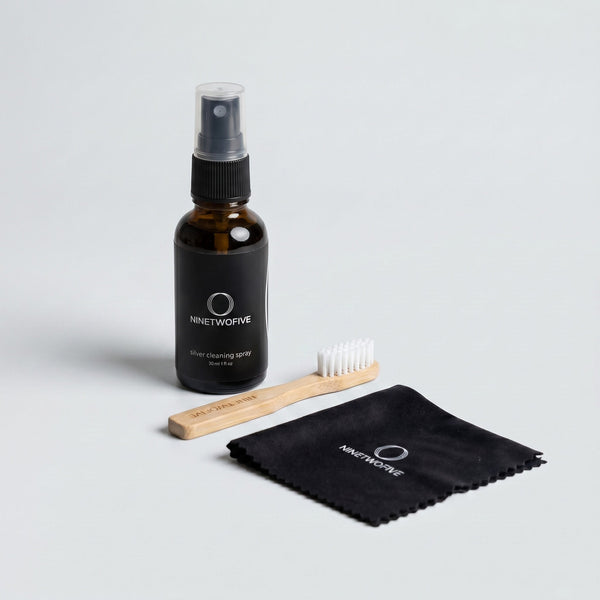
The silver polishing cloth is the most effective everyday tool for polishing silver rings at home. NineTwoFive includes one with every order, as it is the most important item in any silver care routine. Using it correctly makes a significant difference to the result.
Start with clean, dry hands. Oils on the fingers transfer to the cloth and back onto the ring during polishing. Use only a clean section of cloth - grit or debris trapped in the fabric will scratch the surface rather than polish it.
Most polishing cloths have two sides or two layers. The inner layer, usually slightly darker or more textured, contains the polishing compound. The outer layer is a plain buffing cloth. Begin with the inner side: hold the ring firmly and rub in straight back-and-forth strokes along the length of the band. Never use circular motions, as these leave fine swirl marks that become clearly visible in direct light. Apply moderate, even pressure.
As you work, the cloth will turn black. This is the tarnish and oxidation being lifted from the silver - it is confirmation the cloth is working, not a sign that it is dirty or worn out. Once the dullness has been removed, switch to the outer layer and buff the ring to a full shine.
Do not rinse the ring after polishing with the cloth. The anti-tarnish compounds leave a microscopic protective layer that water washes away. Wait ten to fifteen minutes before wearing. Never wash the cloth itself. Washing strips the treatment and renders the cloth ineffective. Store it sealed in a bag or tin between uses.

Method 2: Polishing Compound for Surface Scratches
When a ring has surface scratches that a polishing cloth cannot fully address, a small amount of jeweller's polishing compound or rouge adds more cutting action. Apply the compound to the cloth rather than directly to the ring, then rub in straight strokes with moderate pressure over the affected areas. The compound will darken as it works. Once the scratches have faded, wipe the residue from the ring with a clean, barely damp cloth, dry thoroughly, and finish with the polishing cloth to restore the full shine. Unlike the polishing cloth, compound residue needs to be removed, particularly if it collects in engraved detail or around stone settings.
How Often Is Too Often? The Risk of Over-Polishing Silver Rings
Sterling silver is a comparatively soft metal, and every polishing session removes a microscopic layer of the surface. This is negligible when using a polishing cloth regularly, as the compound in the cloth is very fine. Jeweller's compound and professional buffing wheels remove measurably more material with each use. Over time, an aggressively polished ring will become thinner at the high points of the band, and fine engraved detail can be gradually softened and lost. The practical rule: use a polishing cloth as often as needed. Limit compound use to a few times per year. Reserve professional machine polishing for deep scratches that home methods cannot address.
How to Polish Engraved Silver Rings Without Blurring the Detail
Polishing engraved silver rings requires a more careful approach than polishing a plain band. Repeated polishing directly across an engraved area, even with a cloth, can gradually flatten the depth of the engraved lines over time. The recessed areas that give engraving its contrast and clarity are the same areas most vulnerable to material loss from polishing.
The technique that avoids this is straightforward: concentrate the polishing cloth on the band sections on either side of the engraving rather than sweeping across the engraved detail itself. For recessed lines or lettering that have collected tarnish or polishing residue, a cotton bud barely dampened with warm water works into the grooves safely. Dry the ring completely afterwards before any further polishing. Compound should never be applied directly to an engraved surface, as the abrasive will gradually reduce the definition of the lines with each application, eventually making the detail difficult to read.

For a full routine covering engraved and personalised pieces, including care tips specific to laser-engraved silver, read our guide on How to Clean Your Personalised Jewellery.
How to Polish a Signet Ring
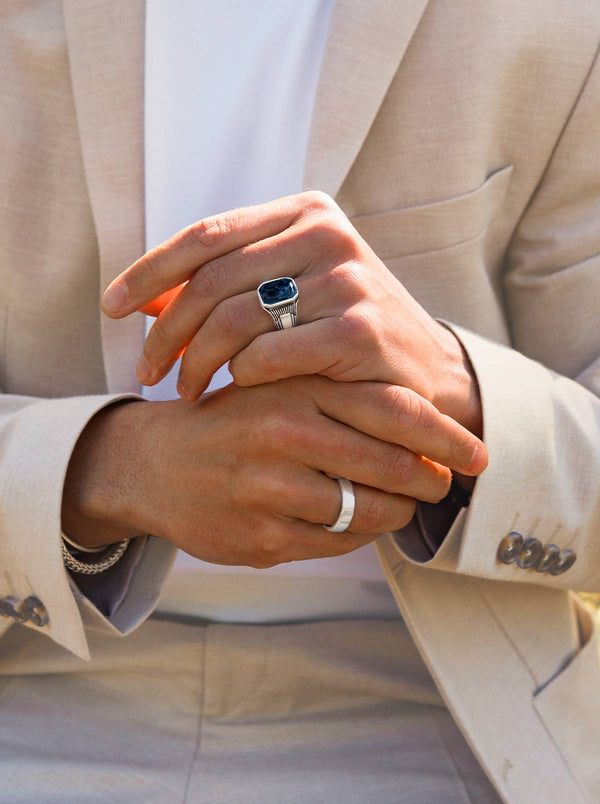
Signet rings have two surfaces that need different polishing techniques: the face (the flat or slightly domed bezel that sits on top of the finger) and the band. Treating both identically produces uneven results and can leave the face looking inconsistent under direct light.
Polishing the Signet Face
The signet face is a large, relatively flat surface that shows every polishing mark more clearly than a rounded band. Use straight, parallel strokes across the face in one consistent direction, working with the grain of the metal rather than against it. Avoid working back and forth in different axes, as this leaves a criss-cross pattern visible in direct light. Pay particular care to the edges where the face meets the shoulder of the ring: these corners are prone to uneven wear and benefit from short, directed strokes. If the face carries engraving, work around the detail rather than across it, following the guidance in the section above.
Polishing the Signet Band
The band of a signet ring responds the same way as a plain band. Use back-and-forth strokes along the length of the shank with even pressure. The rounded profile distributes the polishing action naturally, making this the less technically demanding part of the process. Work the full circumference of the band to maintain consistent shine across the whole ring.
For everything you need to know about signet ring design, finish, and care, read our Silver Signet Ring Guide.
Shop now: Men's Silver Rings

Polishing Silver Rings with Stones
Stone-set silver rings need careful handling during polishing because polishing compound and the mechanical action of the cloth can damage certain gemstones and gradually weaken settings. The key principle is that the cloth and compound are for the silver band only, not for the stone or its immediate setting.
The polishing cloth can be used on the band sections of a stone-set ring, but it should not contact the stone surface directly. Softer, porous stones such as turquoise, opal, and lapis lazuli scratch easily and can be dulled by polishing compounds. Hard stones such as diamond or sapphire are more resilient but the prongs or claws holding them can be stressed if the cloth catches during polishing. Avoid compound entirely on stone-set rings. If the area around the stone has become dull, a cotton bud barely dampened with washing-up liquid solution, applied carefully, is the safest approach. Rinse and dry thoroughly before any polishing of the band sections.
For more on how silver reacts over time and what this means for stone-set pieces, read our guide on Does Sterling Silver Tarnish?.
Should You Polish or Preserve the Patina?
Not every silver ring needs to be polished back to a full mirror finish, and understanding when to leave a ring alone is as important as knowing how to polish silver rings correctly. Solid 925 sterling silver develops a natural patina as it ages: the high points of the band stay bright from contact and friction, while recessed or textured areas gradually deepen to a darker tone. This contrast is a characteristic of genuine solid metal, not a sign of neglect or poor quality.
The decision to polish or preserve comes down to personal preference and the character of the ring. A heavily textured or architectural ring often looks better with its patina intact, as the contrast between bright and dark areas brings out the structure of the design. A plain polished band typically looks best restored to a consistent shine. Neither is wrong. The important thing is that polishing is always reversible: a ring can be polished again at any point. The natural patina that builds up over years of wear cannot be artificially recreated once it has been stripped back.
For more on how solid 925 sterling silver ages and why patina is a sign of authenticity rather than a flaw, read our Silver Ring for Men Guide.

How Often Should You Polish Your Silver Ring?
The right polishing frequency for a silver ring depends on how often it is worn and the conditions it faces. A ring worn daily through a physical job accumulates dullness and surface oxidation faster than one worn occasionally. Matching the routine to the lifestyle prevents both neglect and over-polishing.

A polishing cloth wipe after each wear takes under a minute and prevents the gradual build-up that makes a more intensive session necessary later. Building this into the same habit as storing the ring in its pouch is the most effective way to maintain consistent shine without effort.
What to Avoid When Polishing Silver Rings
Several common mistakes in polishing silver rings cause more damage than the dullness they are meant to correct. Circular motions with a polishing cloth leave fine swirl marks invisible in low light but visible in sunlight. Washing the polishing cloth destroys the treatment compounds that make it effective. Applying compound directly to the ring rather than to the cloth increases the risk of it collecting in engraved lines or underneath stone settings where it is difficult to remove cleanly.
Whitening toothpaste is abrasive enough to shift light tarnish but unpredictable as a polishing method: the grit size varies between products, and it is easy to create scratches rather than remove them. Household metal polish products designed for cutlery or decorative silverware often contain stronger abrasives and chemical agents than jewellery-specific polishing compounds and can cause surface damage to a sterling silver ring if used regularly.

Frequently Asked Questions
What is the best way to polish silver rings at home?
The best way to polish silver rings at home is to use a silver polishing cloth with straight back-and-forth strokes along the band. The cloth removes surface dullness and light marks quickly without water or additional products. For deeper dullness or light scratches, use a small amount of jeweller's compound on a soft cloth before finishing with the polishing cloth.
Can I use toothpaste to polish a silver ring?
Plain white toothpaste can remove light tarnish but is not recommended as a polishing method for silver rings. The abrasive particle size in toothpaste is difficult to control and can leave fine scratches on the silver surface. A jewellery polishing cloth provides a safer and more consistent result with less risk of surface damage.
How do I polish a silver ring with engraving?
Focus the polishing cloth on the band sections either side of the engraved area rather than directly across the detail. Use a cotton bud barely dampened with warm water for any residue inside the engraved lines. Avoid applying compound directly over engraving, as repeated abrasion gradually reduces the definition of the lines and lettering.
Why does my polishing cloth turn black when I use it?
The black discolouration is the tarnish and surface oxidation being lifted from the silver by the polishing compounds in the cloth. It is confirmation the cloth is working effectively, not a sign it is dirty or needs replacing. Do not wash the cloth - the black residue does not reduce its effectiveness, and washing removes the treatment.
How often should I polish my silver ring?
For a ring worn daily in a physical environment, a light wipe with a polishing cloth two to three times a week maintains consistent shine. For office or occasional wear, once a week or after each use is sufficient. Compound polishing should be limited to a few times a year at most to avoid unnecessary material removal.
Can polishing remove scratches from silver rings?
A polishing cloth can remove or significantly reduce very fine surface scratches that are not perceptible to the fingernail. Scratches that can be felt require a polishing compound for meaningful improvement. Deep scratches that catch clearly on the fingernail need professional buffing, as home methods remove too little material to address them effectively.
Should I clean my silver ring before polishing it?
Yes. Polishing a ring that has visible tarnish or surface dirt first moves contamination around rather than lifting it. Clean with warm water and washing-up liquid, rinse thoroughly, and dry completely before polishing. The polishing cloth works on the silver surface itself, not on the layer of tarnish above it.
When should I take my silver ring to a jeweller for polishing?
Take the ring to a jeweller when it has deep scratches that are clearly felt by the fingernail, when home polishing has made no visible improvement after repeated attempts, or when the ring has significant sentimental or monetary value that makes the risk of a home mistake unacceptable. Professional buffing with a polishing wheel removes material precisely and safely.
Polish Little, Polish Often
Knowing how to polish silver rings correctly comes down to using the right tool for the right surface condition, working with the right technique, and building a consistent routine rather than waiting for a ring to deteriorate significantly. A polishing cloth used well takes minutes and keeps solid 925 sterling silver looking exactly how it should, wear after wear, without shortening the life of the metal.
Shop now: Men's Engraved Rings