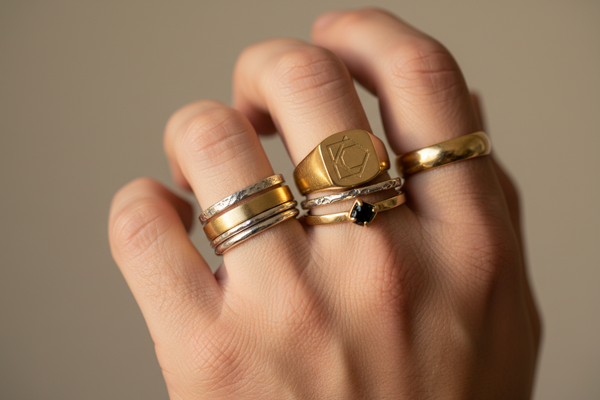
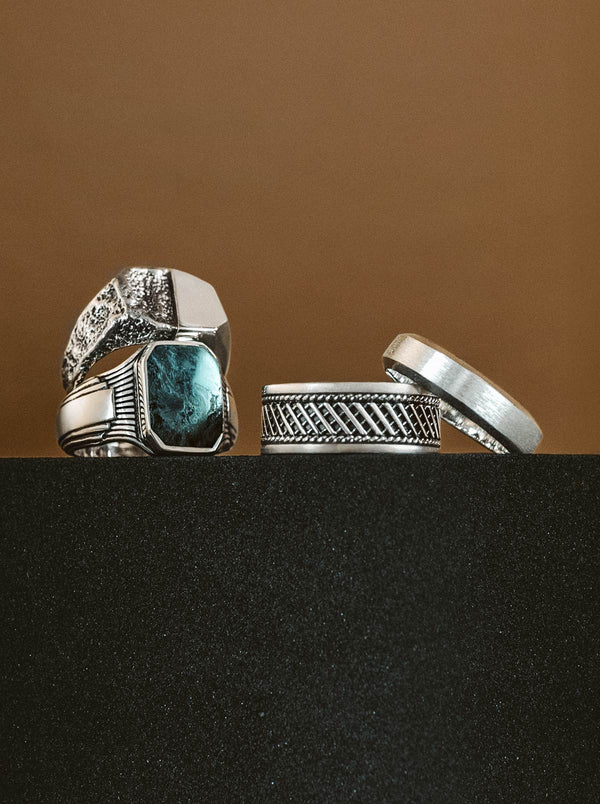
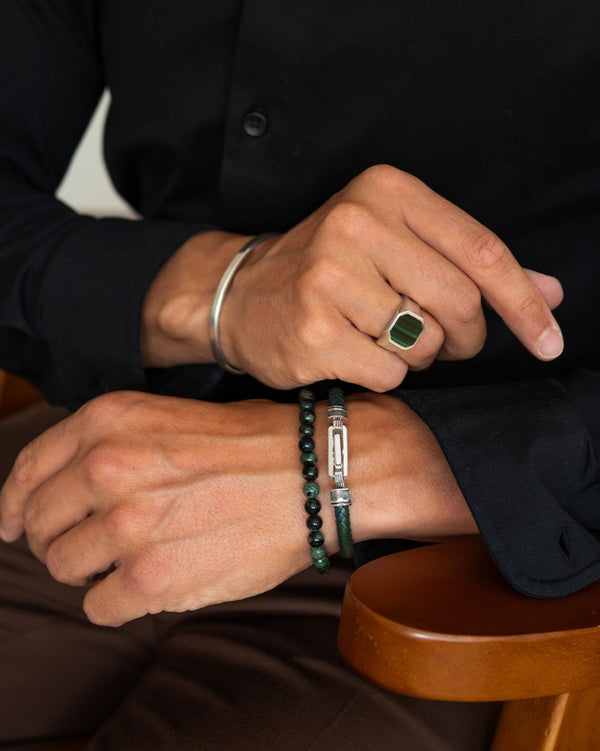
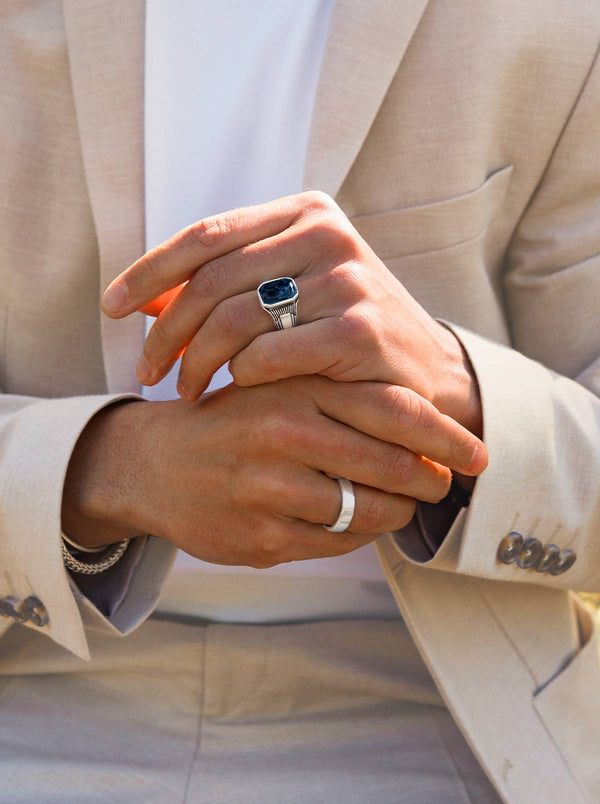
The signet ring originated in Mesopotamia around 3500 BC as a cylindrical seal used to authenticate documents. Ancient Egyptians transformed the concept into a wearable ring. By the Middle Ages, signet rings had become essential tools of British royalty and nobility, used to seal official documents with a unique family crest pressed into wax.
Few pieces of jewellery carry as much history as the signet ring. It has sat on the fingers of pharaohs, sealed the letters of kings, and passed from father to son for generations. Today it is worn by everyone from British aristocrats to the cast of Saltburn. Understanding how it got here makes wearing one feel completely different.

Where Did Signet Rings Come From? The Ancient Origins
The story of the signet ring begins long before the ring itself existed. Its roots lie in the simple human need to prove identity and authority, a need that turned a cylindrical stone into one of history’s most enduring accessories.
Mesopotamia: The Cylindrical Seal (3500 BC)
The earliest ancestors of the signet ring were not rings at all. The people of ancient Mesopotamia used cylindrical seals, small carved objects worn on a cord around the neck or wrist. When rolled across soft clay, they left a distinctive impression that authenticated documents and marked ownership. The word “signet” itself comes from the Latin signum, meaning sign, and that functional logic has never really left the piece.
Ancient Egypt: The First True Signet Ring
Around 2000 BC, the Egyptians took the concept further by attaching the seal directly to a ring. Pharaohs and high officials wore these pieces both as tools of authority and as symbols of their divine status. Many Egyptian signet rings were carved with hieroglyphs, scarab beetles, and royal cartouches. The tomb of Tutankhamun contained several fine examples, giving archaeologists a clear picture of just how central the signet ring was to Egyptian court life.
Greece and Rome: From Seal to Status Symbol
By around 600 BC, the ancient Greeks had adopted the signet ring and elevated it into an art form. Greek craftsmen engraved miniatures of gods, animals, and nature scenes onto precious metal bezels. The Romans carried the tradition further still. Roman senators wore gold rings to reflect their position, while citizens of lower rank wore iron. The Roman general Hannibal famously collected the signet rings from Roman soldiers slain at the Battle of Cannae in 216 BC as proof of how many had died. When Alexander the Great lay dying, he removed his signet ring and passed it to his general Perdiccas as the ultimate symbol of transferred authority.

Signet Rings Through History: A Timeline
The table below gives a quick overview of how the signet ring evolved across the centuries, with particular attention to its development in Britain.

From ancient clay tablets to Netflix period dramas, the signet ring has adapted to every era while keeping its core identity intact. The British thread runs strongest from the Middle Ages onward.
Ready to find your own piece of this history? Explore the NineTwoFive men’s signet rings collection, handcrafted in solid 925 sterling silver.
The Middle Ages: When Signet Rings Became Official in Britain
The Middle Ages marked the moment when signet rings moved from personal accessories to instruments of state in Britain. Literacy was limited, and a wax seal pressed with a unique ring carried more legal weight than a written name. Every nobleman, bishop, and official of consequence owned a signet ring, and the crest or symbol engraved on it was as distinctive as a fingerprint.
King Edward II and the Royal Decree
In the 14th century, King Edward II of England issued a decree that all official documents must be sealed with the King’s own signet ring. This single act cemented the signet ring as an instrument of government. Nobles across the country followed the royal lead, commissioning rings engraved with their family coats of arms. The heraldic tradition that defines the British signet ring to this day was born in this period.
Why Rings Were Destroyed After Death
When a nobleman died, his signet ring was often destroyed or buried with him. This was not sentimentality. It was a practical security measure. Because the ring could authenticate documents in the dead man’s name, allowing it to survive him was an open invitation to fraud. The destruction of a signet ring was the final, official confirmation that its owner’s authority had ended.
See more: Which Finger for a Signet Ring? The Complete UK Guide

The Victorian Era: Britain's Golden Age of Signet Rings
If the Middle Ages gave the signet ring its official function, the Victorian era gave it its soul. The 19th century transformed the signet ring from a practical tool into something deeply personal, emotional, and passed down through generations.
From Seal to Heirloom: A Shift in Purpose
As literacy spread and legal practices modernised, the need to seal documents with wax began to fade. Rather than disappearing, the signet ring simply changed its purpose. Victorian families began commissioning rings as gifts to mark milestones: a 21st birthday, a graduation, an engagement. Rings were given between friends as tokens of loyalty and worn to commemorate loved ones who had died. The idea of the signet ring as a family heirloom, passed from father to eldest son, took firm root in this era and has never left British culture since.
Bloodstone, Carnelian and Sterling Silver
Victorian craftsmen favoured bloodstone above all other materials for signet rings, particularly for men’s designs. The deep green stone flecked with red was thought to symbolise family blood and lineal heritage, making it an ideal surface for a family crest. Carnelian, onyx, and sardonyx were also popular. Sterling silver became increasingly common as the Industrial Revolution made quality materials more accessible, laying the groundwork for the silver signet ring tradition that continues today.

The 20th Century: From Aristocracy to Everyone
The 20th century was a quieter chapter in the signet ring’s story. As formality declined and fashion moved through rapid cycles, the ring’s association with the upper classes became both its strength and its limitation. Within British aristocratic and royal circles, the tradition held firm. King George VI, Queen Elizabeth II, and later King Charles III all wore or have worn signet rings on the left pinky, maintaining an unbroken line of royal tradition stretching back centuries.
By the mid-20th century, however, the signet ring had become less visible in everyday life. It remained a mark of quiet distinction for those who understood its meaning, worn by gentlemen who had inherited rather than sought it out. That restraint, paradoxically, is part of what made the eventual revival so powerful.

The Modern Signet Ring Revival: Why Everyone Is Wearing One
Something shifted in the late 2010s and early 2020s. The signet ring began appearing on fingers that had never worn one before, driven by a convergence of cultural forces: a renewed interest in heritage, a desire for meaningful personalisation, and the influence of British film and television.
Pop Culture and the Signet Ring Renaissance
Saltburn, the 2023 film set in the English aristocracy, featured signet rings as a quiet but unmistakable class marker. The Gentlemen on Netflix placed signet rings front and centre as symbols of old British power meeting new money. Bridgerton brought Regency-era jewellery into the cultural conversation for a new generation. These are not coincidences. They reflect a wider appetite for things that carry weight and story, and the signet ring delivers both more naturally than almost any other accessory.
King Charles III continues to wear his signet ring on the left pinky, as he has for decades. That continuity of image, from an ancient tradition through to one of the most watched public figures in the world, gives the modern signet ring a legitimacy that no amount of marketing could manufacture.
Sterling Silver: The Modern Material of Choice
Gold dominated signet ring history for centuries, partly because of its status and partly because of its practical properties. Today, sterling silver has become the material that best captures the spirit of the modern signet ring. It is durable enough for daily wear, affordable enough to be genuinely accessible, and clean enough in finish to suit both traditional engravings and contemporary minimal designs. For men who want to connect with the long history of the signet ring without the weight of inherited gold, a 925 sterling silver signet ring is the natural choice. The silver jewellery trends guide explores why silver is leading men’s jewellery in 2026 and how to wear it well.
See more: Everything You Need to Know About Silver Ring for Men

FAQ: Signet Ring History
These are the questions we hear most often from men exploring the history of the signet ring for the first time.
How old is the signet ring?
The signet ring in its earliest form dates back to around 3500 BC in Mesopotamia. The recognisable ring-mounted version became common in ancient Egypt from around 2000 BC onward.
Who invented the signet ring?
No single person invented the signet ring. It evolved gradually from cylindrical seals used by the ancient Mesopotamians, which were later adapted by the Egyptians into a wearable ring format.
What does signet mean in Latin?
The word signet derives from the Latin signum, meaning sign. The ring was quite literally the wearer’s personal sign, used to authenticate documents and mark ownership.
Why were signet rings destroyed after their owner died?
Destroying a signet ring at death was a practical security measure. Because the ring could authenticate documents in the dead man’s name, leaving it intact after death risked fraudulent use.
When did signet rings become popular in Britain?
Signet rings became formally important in Britain in the 14th century when King Edward II decreed that all official documents must bear the royal seal. The tradition expanded through the aristocracy and reached its cultural peak during the Victorian era.
Are signet rings still relevant today?
Signet rings are experiencing one of their strongest revivals in generations. Driven by pop culture, a desire for meaningful personalisation, and renewed interest in heritage, they are worn by men and women of all backgrounds across the UK.
Conclusion
Few accessories carry five thousand years of unbroken history on a single finger. The signet ring has outlasted every trend, every empire, and every shift in fashion because it answers something permanent in human nature: the desire to mark who you are and where you come from. Whether you are drawn to its royal lineage, its Victorian heritage, or simply its clean, confident look, the signet ring earns its place. Explore the NineTwoFive men’s signet rings, handcrafted in solid 925 sterling silver with free engraving, and add your own chapter to the story.