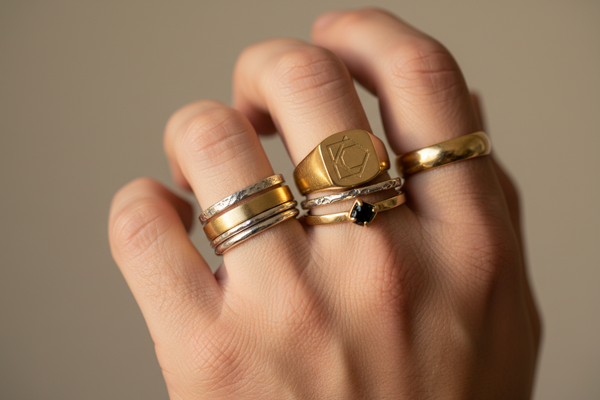
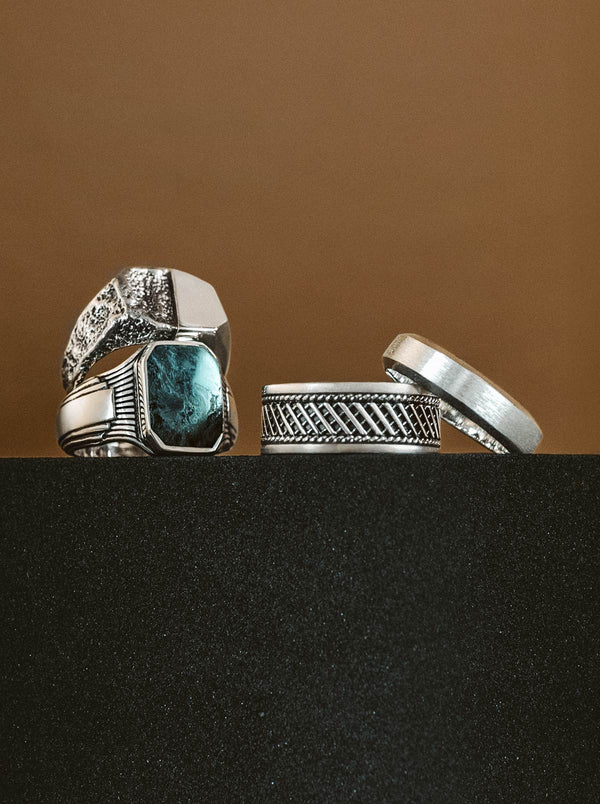
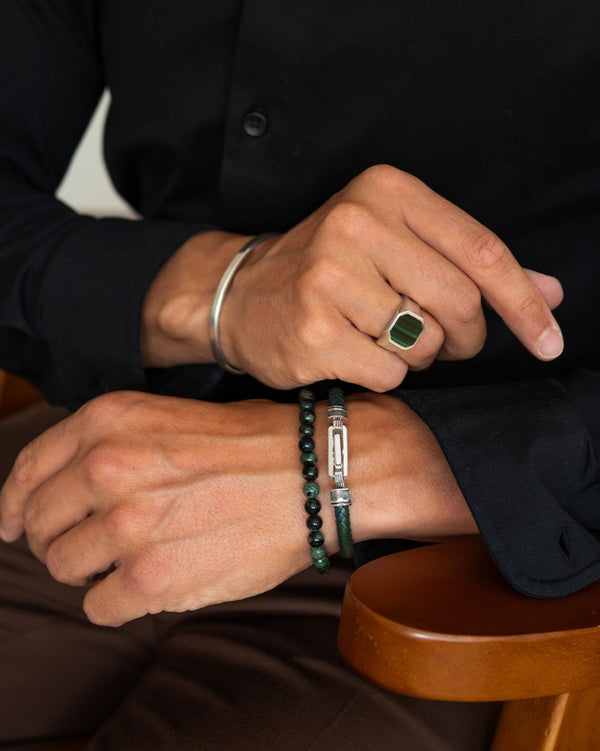
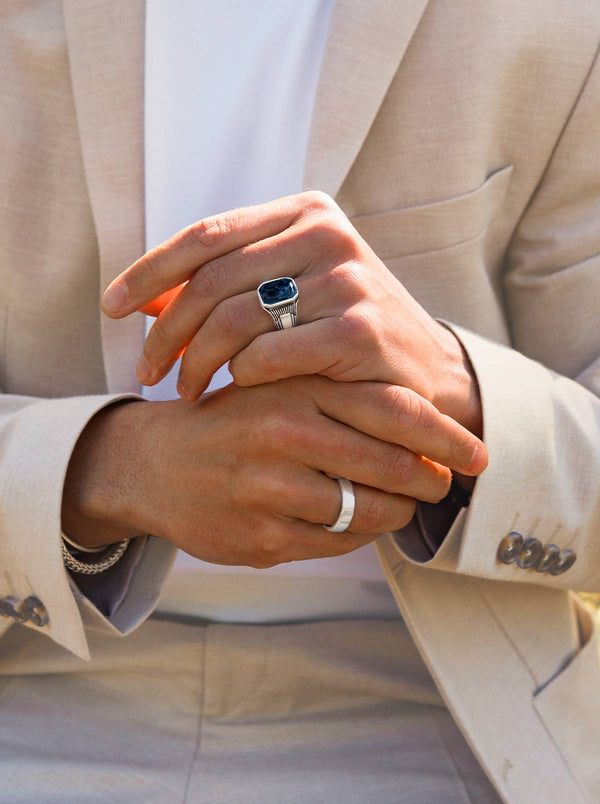
Signet rings mean authority, identity, and family heritage. Historically used to seal documents with a personal crest, they represented power and lineage. Today, what a signet ring means depends on its engraving: a family crest signals heritage, initials represent personal identity, and a plain or stone-set face reflects modern self-expression and quiet confidence.
Few pieces of jewellery carry as much meaning per square centimetre as a signet ring. A small flat face, a chosen engraving, a particular finger: each detail communicates something specific. Whether you are considering wearing one, choosing one as a gift, or simply curious after seeing one on someone you admire, understanding what do signet rings mean turns a beautiful object into something genuinely compelling.
The Original Meaning of Signet Rings
To understand what do signet rings mean today, it helps to understand what these rings were originally built to do. The meaning was not symbolic at first: it was practical and legal.
Authority and Authentication
The word signet comes from the Latin signum, meaning sign. From around 3500 BC in ancient Mesopotamia through to the medieval courts of Europe, signet rings functioned as wearable signatures. The engraved face was pressed into hot wax to seal a letter or document, leaving a unique impression that confirmed both the sender’s identity and the message’s authenticity. In 14th-century England, King Edward II decreed that all official documents must bear the royal seal. At a time when literacy was not universal, it was the most reliable form of identification that existed.
This functional origin is where the signet ring’s enduring associations with authority, trust, and personal accountability come from. The ring was not decorative. It was a tool that carried the full weight of the wearer’s identity and legal standing.
Family Heritage and Lineage
As these rings became more established in British aristocratic culture, their meaning deepened. The engraved face began to carry the family coat of arms or crest, turning each piece into a portable declaration of lineage. These were not fashion accessories. They were the tangible proof of who you were, where you came from, and what authority you could claim. When a nobleman died, his ring was often destroyed or buried with him precisely because of how much legal and personal power it represented. A piece that survived its owner could be used to forge documents in his name.
See more: Signet Ring History: From Ancient Seals to Modern British Icon

What Do Signet Rings Mean in British Culture?
In Britain specifically, what do signet rings mean goes deeper than historical function. These rings sit at the intersection of class, heritage, and quiet confidence in a way that is distinctly British and unlike how they are perceived elsewhere.
The Aristocracy and the Left Pinky
For centuries, British men of the upper classes wore their rings on the left pinky finger of the non-dominant hand. This was not arbitrary. Wearing it on the non-dominant hand protected the engraving from daily wear, and the pinky kept it away from rings worn on other fingers for other purposes. This specific placement became so strongly associated with British heritage and class that it remains the traditional choice today. King Charles III has worn his on the left pinky continuously since he was made Prince of Wales in the 1960s, maintaining an unbroken line of royal tradition that stretches back generations.
From Royal Seal to Gentleman’s Ring
By the Victorian era, this ring type had shifted from being an exclusively aristocratic instrument to a broader symbol of masculine respectability. Merchants, professionals, and men of standing who had no hereditary coat of arms began commissioning pieces engraved with monograms rather than crests. The meaning evolved: it was no longer exclusively about lineage, but about the kind of man who values quality, identity, and the understated confidence that comes with wearing something that means something. This is the tradition that modern British men are drawing on when they choose one today.

What Signet Ring Engravings Mean
The most direct answer to what do signet rings mean lies in what is engraved on the face. Different engraving choices produce entirely different meanings, and understanding this is key to knowing what does a signet ring mean for the individual wearing it.

The engraving is what personalises this ring’s meaning. A family crest speaks to heritage; initials speak to identity; a personal symbol speaks to character. A plain face makes its own quiet statement: that the piece itself is enough, and the wearer does not need to explain it.
For a full guide to choosing what to engrave, including coordinates, dates, and personal symbols, the signet ring engraving ideas guide covers ten approaches with practical advice on complexity and execution.
What Do Signet Rings Mean Today?
The meaning of what signet rings mean has shifted significantly over the past decade, and understanding that shift explains why they are more popular now than at any point in living memory.
From Class Symbol to Personal Expression
For much of the 20th century, these pieces retained a strong association with the upper classes. Wearing one without an inherited right to a coat of arms was sometimes viewed, particularly in Britain, as aspirational in the wrong direction. That gatekeeping has largely dissolved. Today, what do signet rings mean is determined almost entirely by the individual wearing it, not by the family they were born into. When anyone can engrave their own symbol, initials, or meaning onto a face, the piece becomes an expression of who you are rather than who your ancestors were.
What Wearing a Signet Ring Says in 2025
In contemporary British menswear, wearing one of these pieces communicates a specific set of qualities without any words. It says you care about the details of how you present yourself. It says you prefer pieces with substance over pieces that are purely decorative. It says you have made a deliberate choice rather than defaulting to nothing. Whether the piece carries a family crest or a simple set of initials, gold or sterling silver, pinky or index finger, it communicates intentionality. That is what signet rings mean to the modern wearer: that nothing you wear is accidental.
Pop Culture and the Modern Meaning Shift
Recent British cultural touchpoints have reinforced and accelerated the signet ring’s revival. In Saltburn, the signet ring functions as a visual shorthand for old money and aristocratic ease. In The Gentlemen, it signals heritage power meeting contemporary confidence. The fact that King Charles III has worn his consistently and publicly for over fifty years gives the piece an authenticity that no marketing campaign could manufacture. These cultural references have not changed what signet rings mean: they have reminded a new generation that the meaning was always there, waiting to be claimed.

What Does It Mean to Give Someone a Signet Ring?
Giving someone one of these rings carries a different weight from giving most other pieces of jewellery. Because it is engraved and personal, the gift communicates that the giver paid attention, understood who the recipient is, and chose something that will carry meaning long after the occasion has passed.

The occasion shapes what the gift communicates. Understanding what do signet rings mean in each context makes it easier to choose one that lands with genuine weight. A ring given at a 21st birthday marks the beginning of adulthood. One given at graduation honours what has been achieved. One chosen simply to say something of lasting value becomes a daily reminder of that connection.
For more on choosing a meaningful silver ring as a gift, the best silver rings for men guide covers what makes a ring a lasting gift rather than just a stylish one.
What Does the Material Mean?
The metal adds its own layer to what signet rings mean. This is not merely aesthetic: different materials carry different symbolic associations that have accumulated over centuries, and understanding them helps clarify what does a signet ring mean when you see one in a particular metal.
Sterling Silver: Clarity and Modern Confidence
Silver has historically been associated with clarity, purity, and lunar energy, qualities that suggest reflection, self-awareness, and a connection to something larger than status alone. In modern British men’s jewellery, sterling silver has become the dominant material for signet rings precisely because it strips away the class associations of gold without losing any of the presence. A sterling silver signet ring made from solid 925 silver says that the wearer values quality and craftsmanship without needing to signal wealth. It is the material of choice for men who wear their ring as a genuine expression of identity rather than as a status marker.
Gold: Tradition and Prestige
Gold remains the most traditional material and carries the oldest associations: wealth, authority, permanence, and an unbroken connection to centuries of history that preceded modern fashion. A gold version signals a deliberate alignment with that tradition and tends to communicate more gravitas and less flexibility than silver, which is part of its appeal for men who want to wear something that feels unambiguously serious.
Explore NineTwoFive’s men’s signet rings, handcrafted in solid 925 sterling silver with free engraving on every piece.

Conclusion
What signet rings mean has never been fixed. They have meant legal authority, noble lineage, commercial identity, family pride, and personal expression at different points in their history. What remains constant is that wearing one is never accidental. Each ring is always a choice, and that choice always says something. Explore the NineTwoFive men’s signet rings collection, handcrafted in solid 925 sterling silver with free engraving, and choose what yours will say.