Occasionally, yes, if you rinse and dry it straight away. Regularly, no. Plain water does little harm to polished sterling silver, but soap lodges in the links where it cannot be rinsed out or dried, and hard water leaves mineral deposits. Oxidised and plated chains should never be showered in.
You have probably already searched this and found two opposite answers. One page says water is fine and daily wear keeps silver bright, the next says never let it near a shower. Both are partly right, and the difference comes down to four specific things.

Can You Shower With Silver Chain Necklaces? The Short Answer
Yes occasionally, no as a habit. That sounds like a dodge, so here is what sits behind it, because the distinction is the whole point.
Occasionally Is Fine, Daily Is Not
Sterling silver is a hard-wearing alloy and clean water alone does very little to it. If you forget once, rinse the chain and dry it properly and you will see no lasting difference. What causes damage is repetition. Every shower deposits a little soap into the links and a little mineral residue on the surface, and neither fully leaves. After a few months of daily exposure the chain looks flat rather than bright, and the change happens too gradually to notice while it is happening.
Why Advice on This Varies So Much
The pages telling you it is fine are usually thinking about plain water on a simple polished chain, and they are correct about that narrow case. The pages telling you never to do it are thinking about soap, hard water, oxidised finishes and plated pieces, and they are correct too. Nobody separates the cases, so the advice reads as a contradiction when it is really four different situations described as one.
The Four Things That Decide It
The honest answer to can you shower with a silver chain is that it depends, so instead of a blanket rule, work out which side of each factor you are on. If all four land in the left column, the occasional shower genuinely does not matter much. If two or more land on the right, take the chain off.

The two right-hand entries that catch most people out are shower products and chain build, because both feel harmless. Water is rarely the actual problem.
Hard Water Is the Variable Most People Miss
If your taps leave white spots on glassware, your water carries dissolved minerals, and those minerals stay behind on a chain as the water evaporates. The result is a cloudy, milky film that looks like tarnish but is not. It sits on top of the metal rather than reacting with it, which matters because a polishing cloth will not lift it and will just push it further into the links. A sulphurous smell from the tap is a stronger warning again, because sulphur compounds are exactly what turns silver dark.
Why a Chain Is Different From a Ring
Most pages answering can you shower with a silver chain treat all silver jewellery as one category. A chain is a genuinely different case, and it is the reason showering matters more for a necklace than for a ring or a bangle.
Hundreds of Links, Hundreds of Places to Trap Soap
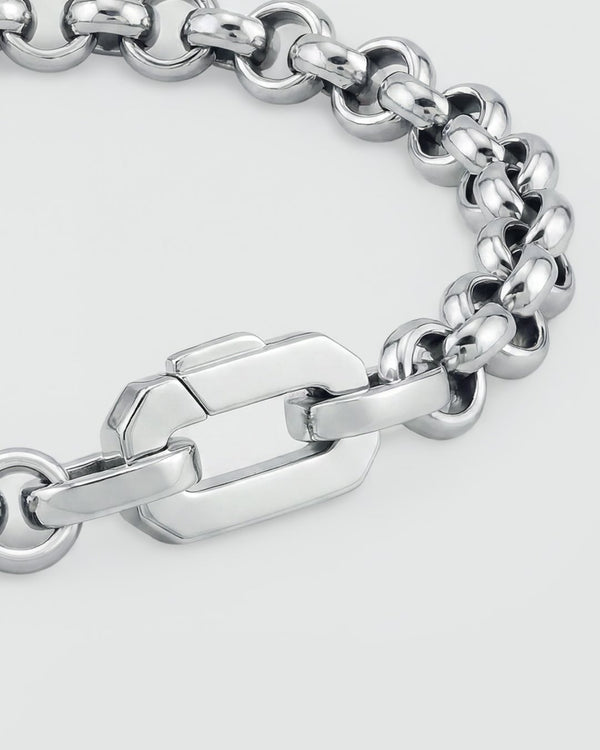
A ring has one continuous surface. Rinse it and the water runs over everything; wipe it and the cloth reaches everything. A chain is dozens or hundreds of separate links, each with an inner surface that faces another link. Rinsing water runs along the outside of the chain and barely enters those inner faces, and a cloth cannot get in there at all. So soap goes in and does not come out, then dries, then holds moisture against the metal. That is the mechanism nobody explains, and it is why chains dull faster than any other piece you own.
The Clasp Is the First Thing to Stiffen
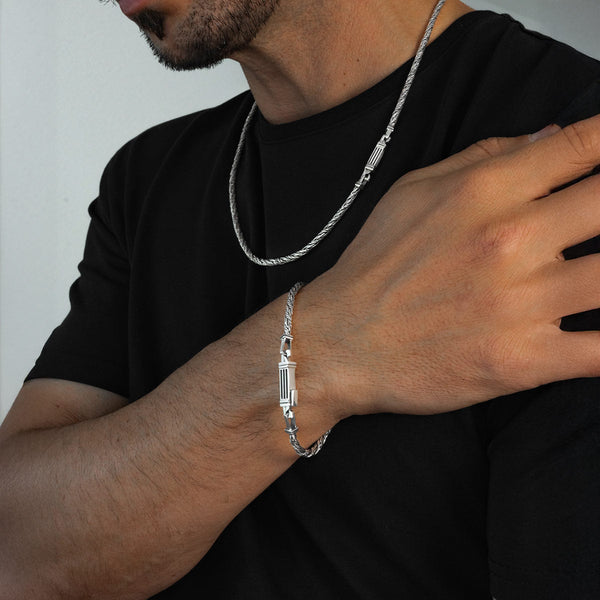
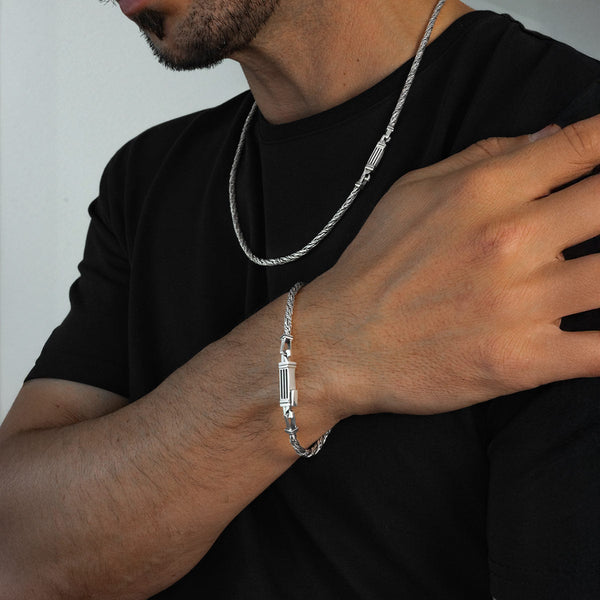
Clasps have moving parts and small internal cavities. Residue dries inside a spring ring or a click mechanism and the action gets progressively stiffer, which is a practical problem as much as a cosmetic one, because a stiff clasp is how chains get dropped down a drain. Work the clasp a few times once the chain is fully dry to keep it moving freely. Chain construction varies more than most people realise, and our men's silver chains range spans everything from a fine symmetric chain to a tightly wound rope.

The pattern is simply how much enclosed space the design has. The tighter and more intricate the construction, the more reason there is to take it off.
Three Problems People Call Tarnish
Getting this right matters because the fixes are different and the wrong one makes things worse. Reaching for a polishing cloth when the problem is mineral scale achieves nothing except grinding the deposit deeper into the links.

Only the first row is straightforward tarnish, and it is the only one a polishing cloth solves. Our Jewellery Cleaning and Polishing Cloth Set is made for exactly that, and the Jewellery Cleaning Kit adds a brush and spray for the heavier cleaning the lower rows need. Tarnish is normal on sterling silver rather than a fault, and our guide on whether silver tarnishes explains the chemistry and how quickly to expect it.
Why Polishing the Wrong Problem Makes It Worse
A polishing cloth works by abrasion. On tarnish that removes a microscopically thin reacted layer, which is exactly what you want. On mineral scale it drags a hard deposit across the surface, and on trapped soap it pushes residue further into places you cannot reach. Identify the problem before touching the chain, because two of the four situations above get measurably worse with polishing.
Pendants, Stones and Oxidised Finishes
Two categories change the answer to can you shower with a silver chain from a matter of degree to a firm no, and neither gets mentioned in the pages currently answering this question.
Set Stones and the Adhesive Underneath
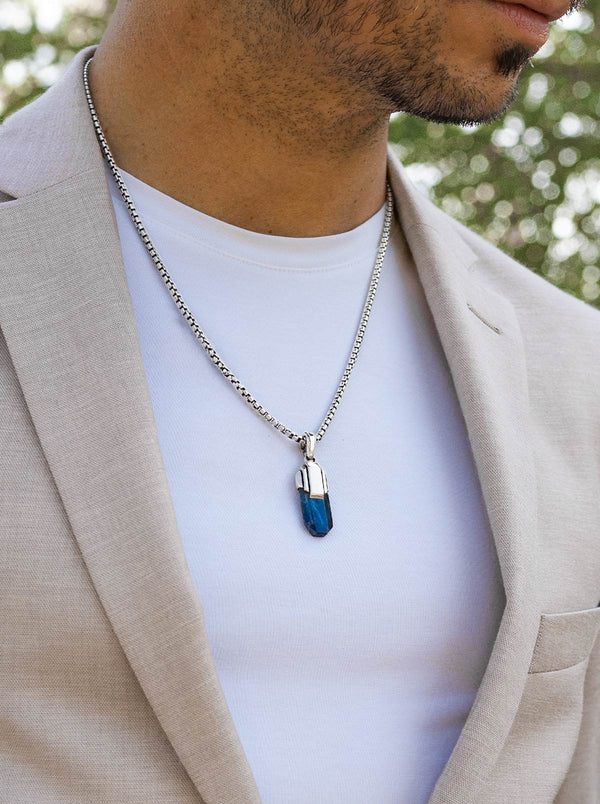
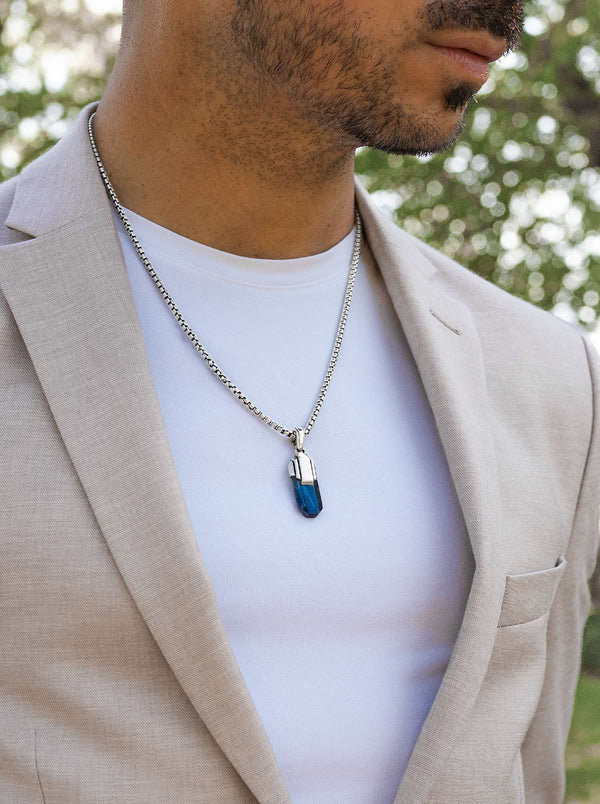
A set stone is held by metal, and often by adhesive as well. Water works into the gap between stone and setting, where it cannot evaporate, and over time that softens the bond and leaves a watermark underneath the stone that no amount of cleaning will reach. Softer and more porous stones are worse again, but even a hard stone sits in a setting that traps moisture. If your chain carries a stone, take it off. Every piece in our men's silver pendants range is worth treating this way, stone or not, since the loop and bail add cavities of their own.

Why Oxidised Silver Is the One Real Exception
Oxidised or blackened silver is not dirt. It is a deliberate darkened layer sitting in the recesses of a design to create contrast, and it is the reason an engraved or textured piece reads clearly rather than looking flat. Soap and repeated wetting lift that layer unevenly, so the contrast fades in patches rather than gracefully. Unlike tarnish, this cannot be polished back, because polishing is what removes it. On an oxidised chain, showering causes visible and permanent change faster than on anything else.
If You Already Showered in It
Nothing here needs to happen in the next thirty seconds, but doing it in the right order matters more than doing it quickly. The most common mistake is putting a damp chain straight back into a closed box.

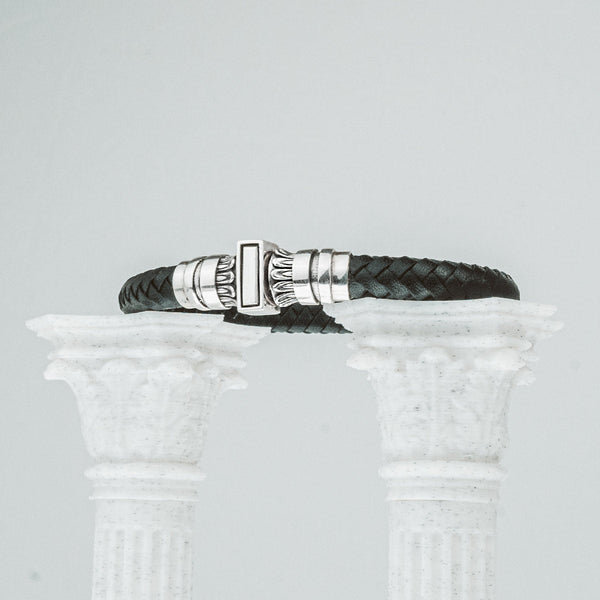
The last row causes more tarnish than the shower did. A damp chain in a sealed box sits in its own humidity for hours. The same principle applies to any piece that combines materials, and our Can You Shower With a Leather Bracelet? guide covers what changes when leather is involved.
Habits That Settle This for Good
Two small changes remove the question entirely, and both take a fortnight to become automatic.
A Dish by the Sink, Not by the Shower
Taking the chain off is only half of it. A shelf beside the shower puts it in warm, humid air twice a day, which does much of the same damage without you wearing it. Keep a small dish somewhere dry and cool instead, ideally in the bedroom, and put the chain in the same place every time so it never ends up near a drain.
Wipe It Dry After Wearing
Ten seconds with a soft cloth at the end of the day removes the sweat and skin oils that drive everyday tarnishing, and it does more for a chain than any occasional deep clean. Store it laid out straight rather than coiled, somewhere dry. If you wear more than one length at a time, keep in mind that layered chains rub against each other, and our chain layering and length guide covers how to combine them so they sit apart rather than tangling.
Length matters here too, since a chain that sits where it rubs a collar collects more residue. Our men's chain size chart sets out the standard lengths. We also stock every size and can custom make any length free of charge, so if you are between sizes or unsure, contact us and we will help you find the right fit and the right piece.
Frequently Asked Questions
Can I shower with my silver chain every day?
Not without visible change over time. Daily soap and mineral residue builds up in the links, and the chain gradually loses brightness even though each shower seems harmless.
Can you shower with silver chain pieces that have a pendant?
Take them off. A set stone traps water between the stone and the setting where it cannot evaporate, which loosens adhesive and leaves a mark underneath.
Will one shower ruin a sterling silver chain?
No. Rinse it in clean water, dry it thoroughly and lay it out straight. A single exposure leaves no lasting mark once the soap is flushed out.
Does hard water damage silver?
It leaves mineral deposits rather than damaging the metal. The result is a cloudy film that a damp cloth removes but a polishing cloth only spreads further.
Can I wear a silver chain in the shower if it is 925?
Sterling silver handles occasional water well, but 925 contains copper, and copper is what reacts. Repeated exposure still accelerates tarnishing.
Is showering with a silver chain worse than swimming?
No. Chlorine is a strong oxidiser and salt water is harsher again, so both are worse than a shower. Take the chain off for either.
Can you shower with a plated silver chain?
Never. Plating is a thin surface layer, and repeated wetting wears it through to the base metal underneath, which cannot be restored by cleaning.
Final Thoughts
So, can you shower with a silver chain? Occasionally and carefully, yes. As a daily habit, no. The water is rarely the problem, and the soap sitting in the links is. Check your finish, know your chain build, and keep a dish by the bed rather than the shower.