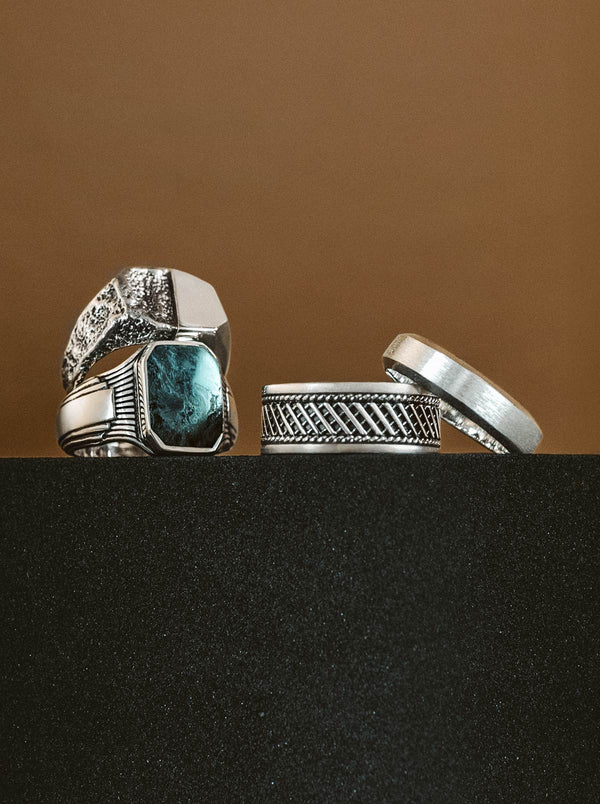
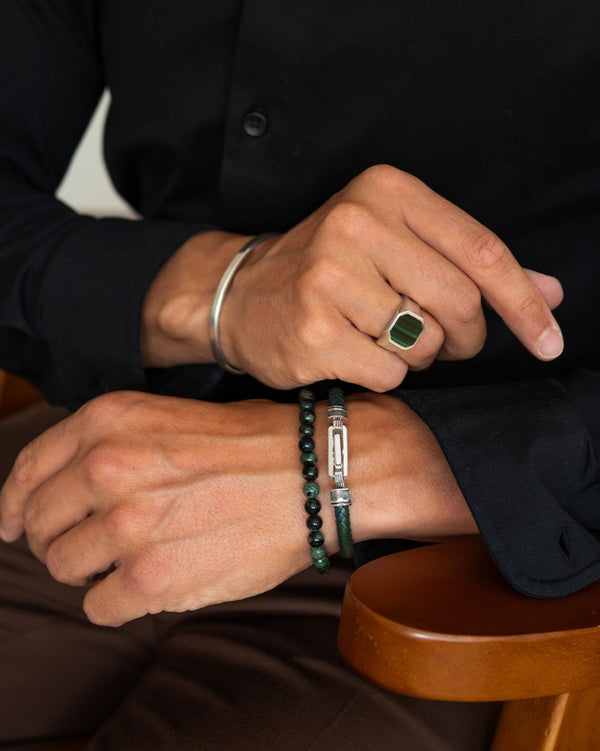
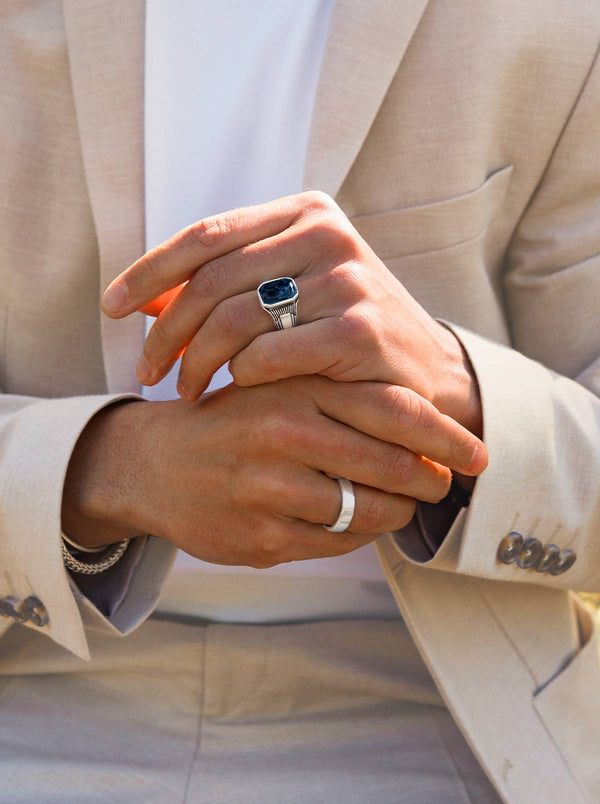
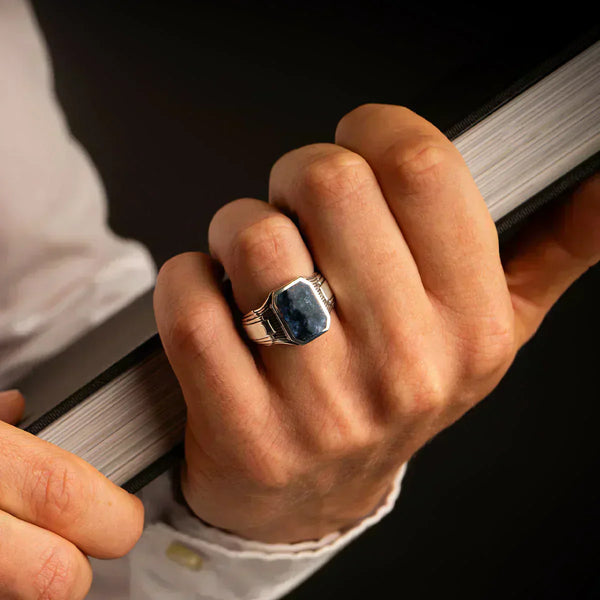
The old rule was simple: pick one metal and stick with it. That rule is gone. Mixing gold and silver rings is one of the most common questions men ask about wearing rings, and the answer is straightforwardly yes, as long as a few principles are followed. This guide covers those principles practically, from the anchor piece rule to occasion-specific combinations you can apply immediately.

Why Mixing Gold and Silver Rings Works
The single-metal rule came from an era when jewellery coordination meant strict symmetry: every piece at the same tone, in the same metal, from the same design family. That approach has given way to something more personal and more practical, and the results are better for it.
Gold and silver are not competing metals when combined thoughtfully. Gold brings warmth; sterling silver brings a cooler, cleaner edge. Together, the contrast makes each piece more visible rather than less, because the difference in tone gives the eye something to move between. The result reads as layered and personal rather than default and uniform.
The other practical reality is that most men are already mixing gold and silver rings without thinking about it. A silver ring alongside a gold watch. A sterling silver signet and gold cufflinks. A silver band worn alongside an inherited gold ring. These combinations already work because the principles behind them are already in place, even when nobody has named them. What this guide does is name them and make them usable.
The One Rule That Makes Every Mix Work
Before finishes, ratios, or skin tones, one principle matters more than all the others when mixing gold and silver rings: choose one metal to lead. This is the line between intentional and accidental. A ring stack with no clear dominant metal looks assembled randomly - pieces from different occasions that happened to end up on the same hand. A stack where one metal clearly leads and the other accents reads as a deliberate choice. The anchor piece is the ring that sets the dominant metal. Everything else in the mix supports it rather than competes with it.
The simplest way to implement this is the 2:1 rule: two rings in the dominant metal, one in the accent. Two silver rings and one gold band reads cohesive. Two gold rings and one silver reads equally cohesive. An even split across the same hand almost never does.

Choosing Your Anchor Ring
The anchor ring is the ring with the most presence in the look. For most men this is the ring with the most visual weight: the widest band, the most significant piece, or the one worn on the most prominent finger. Once the anchor is chosen, its metal becomes the dominant metal for the rest of the look.
If the anchor is a sterling silver signet ring, build around silver and use gold as a single accent. If the anchor is a gold wedding band or an inherited gold piece, build silver rings around it. The anchor's metal is not a constraint - it is a starting point that makes every subsequent decision simpler and faster.
For help choosing which finger the anchor ring belongs on and what that choice communicates, read our guide on which finger to wear a signet ring.
Silver and Gold Ring Combinations That Work for Men
Knowing the principle is one thing; knowing what it looks like in practice is more useful. The combinations below cover the most common situations men encounter when mixing silver and gold rings together, from a first attempt with two pieces to a considered stack across both hands.

Whether you are wearing silver and gold rings on the same hand or across both hands, the most important technical rule is finish matching. Mixing a high-polish silver ring with a brushed gold ring creates a surface conflict that makes the combination look accidental even when the ratio is right. Polished with polished, matte with matte: keeping the surface finish consistent across metals is what converts a mix into a deliberate choice.
How to Match Your Skin Tone When Mixing Silver and Gold Rings
Skin tone is not a rule for mixing metals - it is a guide for which metal should lead when the choice is genuinely open. Most men can wear gold and silver rings together regardless of undertone; what skin tone tells you is which metal to give more weight to, and which to treat as the accent.

The practical test is simpler than any theory. Hold a sterling silver ring against the inner wrist in natural light, then a gold one. The one that makes the skin look more even and alive is the better dominant metal. The other becomes the accent. This takes thirty seconds and is more reliable than trying to classify undertone from a photograph or a vein colour chart.
Men with neutral undertones have the most freedom when mixing silver and gold rings, as both metals sit equally naturally against the skin. For them, the dominant metal decision should be led by outfit colour: cooler outfits in navy, charcoal, and black tend to favour silver as the lead; warmer outfits in olive, camel, and brown work better with gold leading.
Fitting Mixed Metal Rings Into Your Everyday Carry
Rings do not exist in isolation. They sit alongside watches, belt buckles, cufflinks, and other hardware a man wears every day. When mixing gold and silver rings, the existing accessories in the look are already part of the equation and often provide the dominant metal without any additional thought.
When You Already Wear a Watch
A watch is the largest metal piece most men wear, which makes it the natural anchor for the entire look, not just the wrist. A silver watch naturally positions silver as the dominant metal; a gold watch does the same for gold. Two silver rings with a gold watch on the other wrist reads well because the watch establishes the dominant tone, and the silver rings provide the repetition that makes the gold accent feel chosen. A two-tone watch bridges both metals automatically, which is why it is the most versatile starting piece for anyone new to mixing metals across the hand and wrist.
Belt Buckles, Cufflinks, and Hardware
Hardware across the rest of the outfit contributes to the overall metal mix, even when it is not jewellery in the traditional sense. A silver belt buckle and silver cufflinks reinforce silver as the dominant metal across the whole look, which means a single gold ring can be introduced as an accent without any disruption. The rule of repetition applies here too: each metal should appear at least twice in the overall look to read as intentional. A single gold ring surrounded by entirely silver hardware reads like an oversight. Adding a second gold element - a subtle watch detail, a tie bar, a coin - converts it into a decision.
For more on what different ring choices communicate and how placement shapes the message, read our guide on men's rings meaning.

Gold and Silver Rings by Occasion
The same principles apply regardless of occasion, but the overall scale of the look changes. How many rings, how much contrast, and how bold the mix is should be calibrated to what the day or event calls for.

The consistent point across all occasions is that restraint is not about avoiding mixed metals - it is about keeping the total scale appropriate to the setting. A formal environment does not prohibit mixing gold and silver rings; it simply requires keeping the number down and the individual pieces quiet. A casual weekend gives more room to explore, not because the rules change, but because the context tolerates greater variation in scale and contrast.
Shop now: Men's Silver Rings
Common Mistakes Men Make When Mixing Gold and Silver Rings
Most attempts to mix gold and silver rings that do not work well are not wrong in principle. They make one of a small number of specific errors that are easy to identify and correct once you know what to look for.
Splitting the Mix 50/50
An even split between gold and silver rings with no clear dominant metal is the most common mistake. Two gold rings and two silver rings alternating on the same hand leaves the eye with no direction to follow. The fix is immediate: give one metal three pieces and the other one, and the look resolves. The dominant metal does not need to be the more expensive one or the more significant one - it simply needs to lead.
Mismatching Finishes
A polished silver ring next to a brushed gold ring creates a surface texture conflict that makes the mix look careless even when the ratio is correct. Finish consistency is what signals that the combination was chosen rather than assembled from whatever happened to be available. Keep both metals at the same surface treatment as a default. If you want to use contrasting finishes deliberately, make sure the contrast is the point - not a side effect of combining rings from different contexts.
Adding Too Many Rings
Mixed metals draw more visual attention than single-metal stacks because there is more for the eye to process. This means the total number of rings needs to be slightly lower when mixing metals than it would be wearing one metal alone. Three rings across both hands is a manageable starting point; four is achievable with more experience. Beyond that, the mix needs a clearer hand to manage without tipping from considered into cluttered.
Wearing Mismatched Design Languages
This is the mistake that most guides miss entirely. Two rings can have the correct metal ratio, matched finishes, and still look wrong together because one is slim and minimal and the other is heavy and ornate. A narrow architectural band and a chunky engraved signet ring speak different design languages. When mixing gold and silver rings, the design character needs to stay consistent across all pieces: minimal with minimal, architectural with architectural, textured with textured. The metal mix then becomes one element of a cohesive look rather than a clash of styles that the different metals merely highlight.
For a full guide to the main ring styles and how they differ in character and design language, read our guide to types of men's rings.

Frequently Asked Questions
Can you wear gold and silver rings together?
Yes. Wearing gold and silver rings together is a recognised and widely practised approach to men's jewellery. The key is ensuring one metal leads and the other accents, that finishes are matched across both metals, and that the total number of rings stays appropriate for the occasion.
Can you wear silver and gold rings on the same hand?
Yes. Wearing silver and gold rings on same hand often works better than splitting them across two hands. Wearing them this way requires keeping one metal dominant, using the 2:1 rule as a starting point, and ensuring the rings share a consistent finish and design language. A polished silver ring and a polished gold ring on the same hand read as intentional. Mismatched finishes do not.
Does mixing gold and silver rings look cheap?
No, not when the principles are followed. The finish of the pieces matters more than the price. A matte silver ring and a brushed gold band from quality sterling silver and solid gold will always look more intentional than a high-shine mix of cheap plated pieces. Start with quality materials in each metal, match the finishes, and let one metal lead.
How many rings should you wear when mixing metals?
Three rings across both hands is a reliable starting point for most men: two in the dominant metal, one in the accent. Four is possible with practice. Beyond four, the look becomes harder to manage without experience in calibrating the balance between metals, finishes, and design weight.
Which metal should be dominant when mixing gold and silver rings?
Let the anchor piece decide. Whichever ring carries the most visual weight in the look, whether by size, significance, or placement, sets the dominant metal. If the anchor is silver, build silver-dominant around it. If it is gold, use silver as the accent. When there is no clear anchor, the skin tone wrist test provides a practical guide.
Does skin tone matter when mixing gold and silver rings?
Skin tone is a useful guide rather than a rule. Cool undertones tend to favour silver as the dominant metal; warm undertones tend to favour gold. Neutral undertones can lead with either, and the outfit's colour palette becomes the deciding factor. The simplest test: hold each metal against the inner wrist in natural light and note which makes the skin look more even.
Can you wear a gold wedding band with silver rings?
Yes. A gold wedding band is a clear anchor piece that establishes gold as the dominant metal. Sterling silver rings worn on other fingers on either hand read as the accent. Keep the silver pieces slimmer than the wedding band to ensure the gold ring retains visual priority, and match finishes across both metals wherever possible.
What is the easiest way to start mixing gold and silver rings?
Start with what you already own. If your primary ring is silver, add a single slim gold band on an adjacent finger or the other hand. If your primary piece is gold, introduce one silver ring alongside it. Apply the finish-matching rule from the first combination, and build from there once you are comfortable with how the two metals interact in the look.
Start With What You Already Own
Mixing gold and silver rings comes down to a few clear principles: one metal leads, finishes stay consistent, and the design language is shared across all pieces. The most effective way to mix gold and silver rings is to start with sterling silver as the foundation, with gold as the accent that adds contrast without overriding the look. Apply the rules to what you already own before buying anything new.
For everything you need to know before choosing your next silver ring, from design styles to sizing and care, read our Silver Ring for Men Guide.
Shop now: Men's Signet Rings