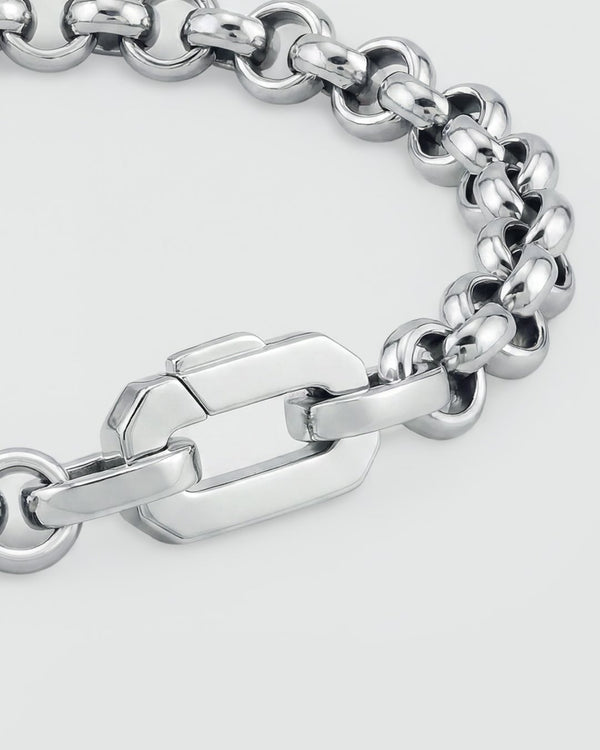
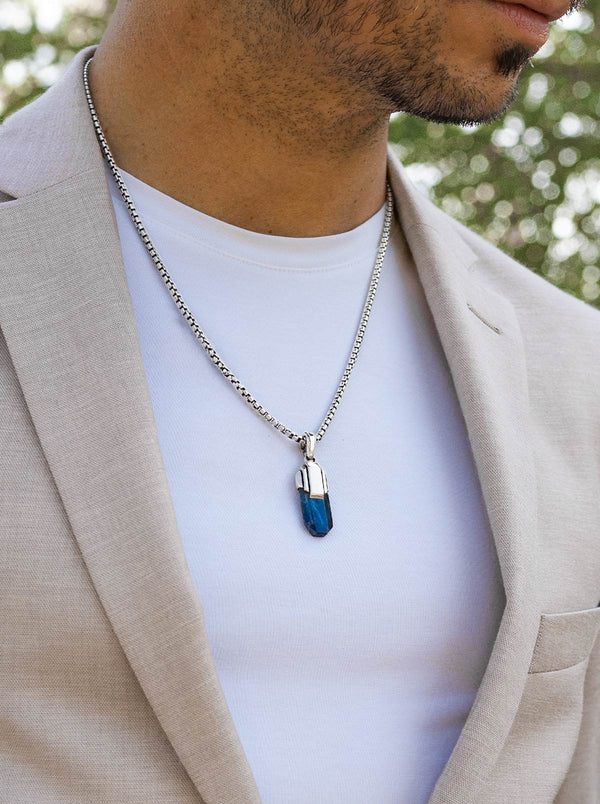
The main types of silver chain links are cable, curb, rope, box, Byzantine, Figaro, and belcher. Each link structure determines how the chain drapes, how it reflects light, and whether it holds a pendant cleanly. Two chains of the same width can wear completely differently because of link geometry. Understanding the link type is the most useful decision in choosing a men's silver chain.
Most chain guides list types without explaining what changes between them. The link is the unit from which everything follows: drape, light, feel against the skin, and pendant compatibility. This guide covers the main types of silver chain links, how each structure works in practice, and which link types suit pendants or daily wear best.
Why the Link Structure Matters
The geometry of each link determines how the chain drapes, how it catches light, and how it responds to movement. Two chains at the same width can look and feel completely different because of how their links are shaped and connected. Three principles govern this:
- Open links (cable, belcher) allow the chain to move freely in any direction, producing a fluid drape that follows the contour of the chest.
- Flat interlocking links (curb, Figaro) restrict lateral movement and keep the chain sitting closer and more uniformly against the skin.
- Complex weaves (Byzantine) have controlled internal movement: the chain moves within the weave structure but not freely, producing a structured drape with visual depth.
Light reflection follows the same logic. Smooth open links produce a clean, even shine. Twisted links such as rope and curb catch light from multiple surfaces simultaneously, creating a shifting shimmer. Byzantine weaves have deep recesses that create shadow alongside shine, giving them more visual weight than their width suggests.
The Main Types of Silver Chain Links
The table below covers the seven most common link types across the six dimensions that matter most for men's jewellery: structure, drape, light, pendant compatibility, and best use.

Cable and box chains are the most versatile pendant carriers. Curb is the most consistently worn solo chain in men's jewellery. Rope, Byzantine, and Figaro each have stronger individual character and suit solo wear or use as an anchor piece.
Silver Chain Link Types in Detail
Each link type has a specific character in daily wear beyond what a photograph shows. The weight distribution, the movement, and how it interacts with pendants all vary significantly between types.
Cable and Trace Links
Uniform oval links connected in a simple open sequence. Each link sits at 90 degrees to the adjacent ones, producing the most fluid drape and the most neutral aesthetic of any chain type. At narrower widths it becomes a trace chain. Cable chains are the most reliable pendant carriers because the open geometry allows the bail to pass through easily and the pendant moves naturally without the chain rotating.
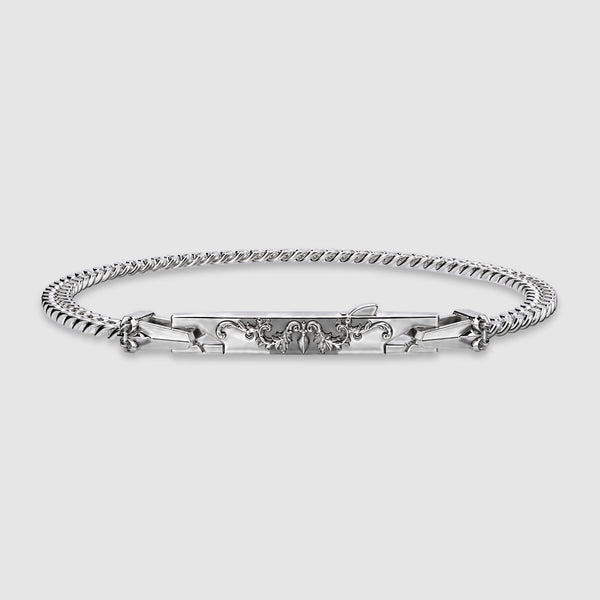
NineTwoFive's Emir is a 2.5mm minimalist cable-style chain in solid 925 sterling silver, suited to understated daily wear or layering beneath a second chain.

Curb Links
Oval links twisted and interlocked flat against each other. The flat surface creates a slightly faceted reflection that shifts as the chain moves. The close-fitting interlocked structure sits nearer to the skin than a cable chain. This makes curb chains the most specifically masculine link type and a consistent choice for solo wear or pendant use at medium weights. The Cuban link is a heavier curb variation with more pronounced interlocking.
Rope Links
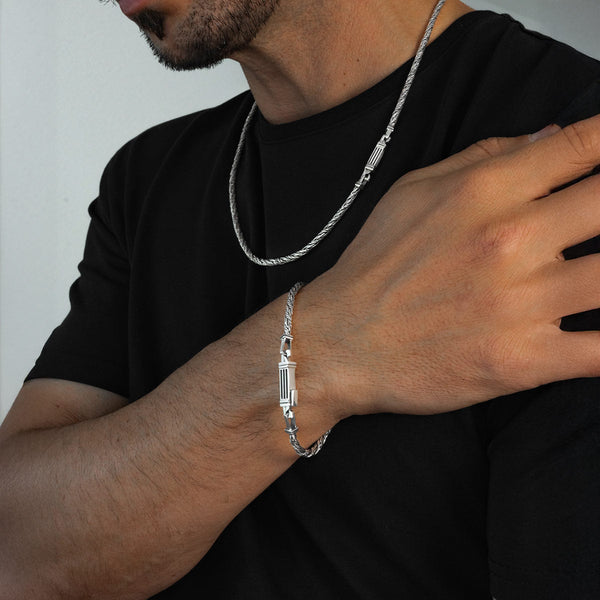
Two or more strands of metal twisted together around a central axis, creating a helical surface with multiple facets. Rope chains have more visual complexity than cable or curb at the same width and enough character to work as solo pieces. The twisted surface also complements pendants with complex designs or stone settings by adding texture to the chain itself rather than providing a neutral background.
NineTwoFive's Nadir is a 3mm twisted rope chain in solid 925 sterling silver. The clasp is designed to be worn as a pendant at the front of the chain.

Box and Venetian Links
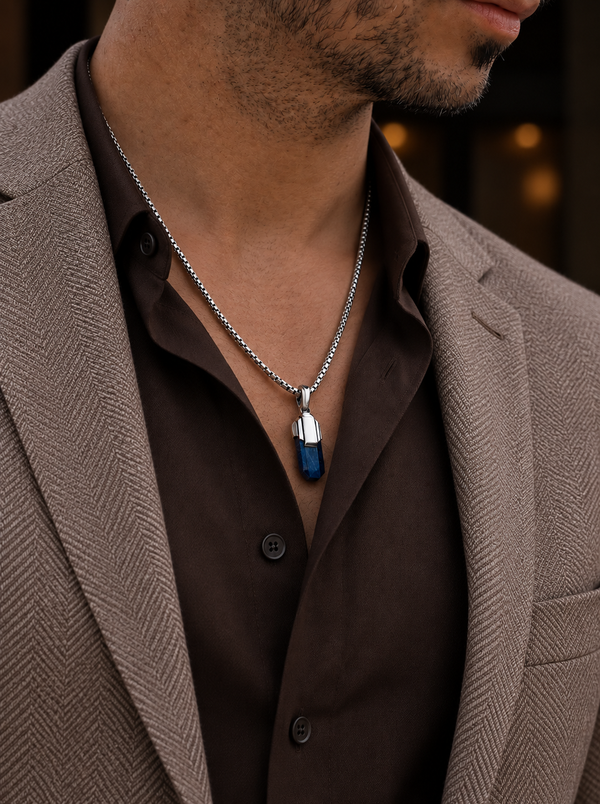
Square links connected at precise 90-degree join points. The geometry produces an architectural regularity and clean, consistent light reflection from flat surfaces. Because the square link resists rotation under load, box chains are among the most reliable pendant carriers: the pendant stays centred and the chain does not twist. This makes the box chain the most understated and versatile choice for men who want a chain that pairs cleanly with almost any pendant design.
NineTwoFive's Kamal is a 3mm Venetian box chain in solid 925 sterling silver, available in 50cm, 55cm, and 60cm.

Byzantine Links
Multiple interlocked links woven through each other in a specific pattern requiring individual manipulation of each unit during assembly. The result is a chain with visible three-dimensional structure, significant visual weight relative to its width, and a character that reads as craft rather than standard manufacture. Byzantine chains work best as solo pieces in solid 925 sterling silver, where the complex weave points are strong throughout.
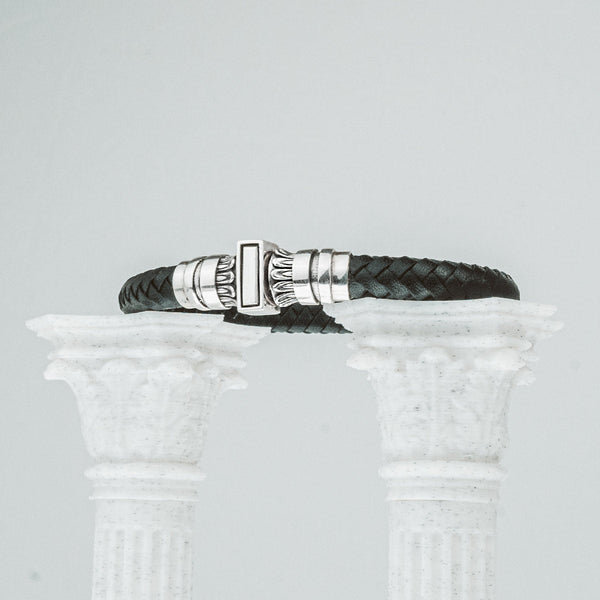
NineTwoFive's Ramsi is a 3.5mm Byzantine chain inspired by the Cavetto ornament of ancient temple architecture. The clasp features a scarab motif and can be worn as a pendant.

Figaro Links
An Italian link pattern alternating between one longer link and two or three shorter links in a repeating sequence. The rhythm creates more visual interest than a plain cable or curb chain without the structural complexity of a rope or Byzantine. Figaro chains work with pendants and alone, and suit men who want a recognisable link pattern with heritage character at a mid-statement level.
Belcher Links
Wide D-shaped links connecting at 90-degree angles, producing a bold, open chain with substantial presence even at moderate widths. The belcher is one of the most recognised chain types in the UK but largely absent from American guides, which makes it underrepresented online despite its prevalence in British men's jewellery. The large link openings make belcher chains among the best pendant carriers available.
For guidance on how to combine different link types in a layered combination, read our men's chain layering guide.
Which Link Types Hold a Pendant Best
Pendant compatibility depends on how the link geometry behaves under load. The wrong combination results in a pendant that rotates, slides, or places uneven pressure on the chain at the bail.

Box and belcher chains lead because of geometric stability: the square link resists rotation, and the wide D-shaped link provides a large, secure bail opening. Rope and Byzantine carry pendants but work best with a sturdy bail and appropriate weight for the chain's width.
For a full guide on matching chain width, link type, and pendant weight, read our guide on choosing the best chain for pendants.
For help with chain length relative to build, see the men's chain size chart.
Shop now: Men's Silver Chains
Durability by Link Structure
Link geometry determines where mechanical stress concentrates. The following applies to solid 925 sterling silver throughout:
- Cable and trace: simple join geometry distributes stress evenly; reliable under tension; very durable for daily wear.
- Curb: flat interlocking links share load across multiple contact points; one of the most durable common chain types; deforms before breaking under normal use.
- Rope: more join points than cable or curb, but solid 925 rope chains are very durable because each strand reinforces the others. Hollow rope chains are significantly less durable and should be avoided.
- Box: strong under tension; more vulnerable to bending forces at the square join points than oval-link chains.
- Byzantine: many small contact points within the weave; solid 925 is required for durability; plated Byzantine chains wear through at weave points relatively quickly.
For guidance on cleaning any link type in solid 925 sterling silver, read our guide on how to clean a sterling silver chain.
Frequently Asked Questions
What are the main types of silver chain links?
The main types are cable, curb, rope, box, Byzantine, Figaro, and belcher. Cable and box are the most versatile pendant carriers. Curb is the most consistently worn solo chain in men's jewellery. Byzantine and belcher have the strongest individual character.
Which silver chain link type is best for a pendant?
Box and belcher chains are the most reliable. Their geometry resists rotation under load and provides a secure bail opening. Cable and curb chains work well for most pendant weights. Rope and Byzantine can carry pendants but suit lighter or medium-weight pieces.
What is the difference between a curb chain and a cable chain?
A cable chain uses open oval links at right angles, producing a fluid drape and clean even light. A curb chain uses twisted oval links interlocked flat, sitting closer to the skin with a slightly faceted surface that shifts in light as the chain moves.
What is a belcher chain?
A belcher chain uses wide D-shaped links connecting at 90-degree angles. It is one of the most recognised chain types in the UK but underrepresented in international guides. Its large link openings make it one of the best pendant carriers and it has a bold, open drape.
Which silver chain link type is most durable for daily wear?
Curb and solid cable chains are the most durable for everyday use. Solid 925 rope chains are also very reliable. Avoid hollow rope chains and plated Byzantine chains: hollow rope is vulnerable to crushing, and plated Byzantine wears through at the complex weave points quickly.
The Link Is the Foundation
Understanding the link type is the most useful starting point when choosing a silver chain. The geometry determines how the chain moves, how it reflects light, whether it carries a pendant cleanly, and how it holds up over years of wear. Width and length decisions follow naturally once the link type is clear.