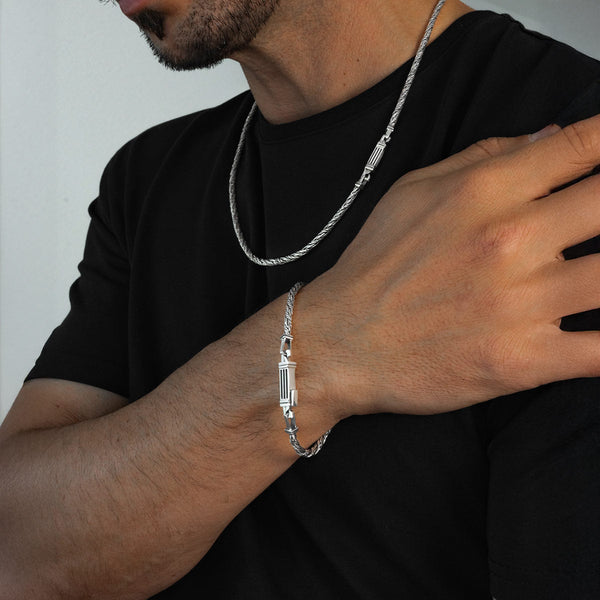
A silver chain turns black when it reacts with sulphur, not oxygen. How quickly it happened identifies the source: gradual darkening over months is normal ambient tarnish, while a silver chain turned black within days points to a concentrated sulphur source such as a hair product, self-tanner, medication or chlorinated water.
Before anything else: your chain is almost certainly fine, and it is almost certainly real. Blackened silver looks alarming and is one of the most recoverable things that can happen to a piece of jewellery. The useful question is not what to scrub it with, but what caused it, because that decides whether it comes straight back.

It Is Not Oxygen, and That Matters
Most pages explaining why a silver chain turned black say it oxidised. That is the wrong word for the wrong process, and the mistake has a practical cost rather than just an academic one.
Silver Reacts With Sulphur, Not Air
Silver does not react with oxygen at normal temperatures. What forms on a darkened chain is silver sulphide, produced when the metal meets sulphur compounds, either as hydrogen sulphide in the air or through direct contact with something sulphur-bearing. Sterling silver is 92.5 per cent silver and 7.5 per cent copper, and the copper reacts readily too, which is why a sterling chain darkens faster than a piece of fine silver would.
Why the Distinction Changes What You Do About It
If air were the culprit there would be nothing to do, since air is everywhere and unavoidable. Sulphur is different. It arrives from identifiable places, most of which are sitting in your bathroom cabinet or your wardrobe, and identifiable places can be removed. That is the difference between accepting a silver chain turning black as inevitable and actually stopping it.
How Fast Did It Happen?
This is the single most useful diagnostic and almost nobody asks it. The speed of the change narrows the cause down more effectively than any list of possible culprits, because concentrated sources work fast and ambient air works slowly.

The first row covers most cases and needs no investigation at all. Anything faster than a fortnight means something specific is in contact with the metal, and it is worth finding.
Finding the Source
Work through the obvious candidates first, then the ones that surprise people. Almost every fast case of a silver chain turned black traces back to one of the items below.
The Everyday Suspects
Hairspray, dry shampoo and styling products are the most common, partly because they are applied above the neck and settle onto whatever is there. Deodorant and antiperspirant come next, then moisturiser and sunscreen, then fragrance. Self-tanning products deserve a special mention, because the active ingredient reacts strongly with silver and can darken a chain in a single application. In every case the fix is the same: put the chain on last, once everything else has dried.
The Ones People Never Suspect
Rubber and latex release sulphur continuously, so a chain stored in a drawer next to elastic bands or a phone case will darken without ever being worn. Wool does the same, because the fibre contains sulphur-bearing amino acids, which is why a chain worn under a jumper can blacken faster in winter. Handling eggs or onions transfers sulphur directly. Chlorinated water is harsher again, and our Can You Shower With a Silver Chain? guide covers water exposure in detail. Finally, perspiration itself contains sulphur-bearing compounds, and some medications increase that, which is why body chemistry genuinely varies between people. A darkening chain is not a health signal in itself, though skin that becomes irritated rather than simply marked is worth mentioning to a doctor.
How to Test for It
Clean the chain properly once, then note the date. Remove one variable at a time and give each a week: start with whatever touches your neck most often, and keep the storage location constant so you are only changing one thing. If the chain stays bright for a fortnight, you have found it. This takes patience but it is the only method that actually works, and it beats cleaning the same chain every month indefinitely.

When Black Will Not Come Off
Sometimes a silver chain turned black stays black no matter how long you polish it, and that is informative rather than hopeless. There are two very different reasons for it, and they lead to opposite conclusions.
Black Inside the Links
A cloth reaches the outside of a chain and nothing else. Each link has inner faces pressed against its neighbours, and tarnish sitting there will keep the chain looking dark even after every outer surface is bright again. This is not a failure of your cleaning, it is a limit of reach, and it is specific to chains rather than rings or bangles. A jeweller with an ultrasonic bath can flush those enclosed areas properly.
When It Is Not Tarnish At All
The other possibility is that the dark area is not a surface reaction but the base metal beneath a worn plating. Plated pieces stay bright longer than solid silver, then change in patches at whichever points rub most, often showing a slightly different colour rather than an even grey. No amount of polishing restores that, because there is nothing left to polish. Look for a 925 hallmark before assuming anything, and our guide on whether silver tarnishes explains what normal behaviour looks like.

Only the first two rows describe tarnish, and both are recoverable. The lower two are about what the chain is made of rather than how dirty it is.
Does This Mean My Chain Is Fake?
This is the worry sitting underneath most searches on this subject, so it deserves a direct answer rather than a paragraph buried at the end.
Real Silver Does Turn Black
Yes, and it is the expected behaviour of the alloy. A chain that darkens is demonstrating exactly the reactivity that solid sterling silver has. Finding that your silver chain turned black is evidence of authenticity rather than the opposite, which is the reverse of what most people assume when they first see it.
What Would Actually Be Suspicious
A chain worn daily for a year that has never dulled at all is more questionable than one that tarnishes, because that usually means a coating is doing the work. So is an absent hallmark, a green or coppery tone appearing at the wear points rather than grey, or a piece that feels noticeably light for its size. Every chain in our men's silver chains range is solid 925 sterling silver, hallmarked and unplated, which is precisely why they tarnish and precisely why polishing brings them back.
What to Do If You Still Have Doubts
Three checks settle it without leaving the house. Find the hallmark first, usually stamped on the clasp or a small tag near it. Then hold a magnet to the chain, because silver is not magnetic and a chain that pulls towards one has a steel or nickel core. Finally, look at how the darkening is distributed: a silver chain turned black evenly across its whole length is behaving like solid metal, whereas patchy change concentrated at rub points suggests a coating. If two of the three still leave you unsure, any jeweller can test the metal in minutes.

Cleaning It, and Stopping It Coming Back
The cleaning itself is the easy half and takes a few minutes. Preventing a repeat is the part worth your attention, because a chain cleaned without changing anything will look the same again within weeks.
Clean It Once, Properly
Use a silver polishing cloth on a dry chain, working in short sections, and escalate to a barely damp cloth only if the dry pass is not enough. Never soak a chain, because the links hold whatever you put them in. Our Jewellery Cleaning and Polishing Cloth Set covers routine polishing, and for a chain that has gone properly black the Jewellery Cleaning Kit adds a brush and a silver cleaning spray. Our How to Clean a Sterling Silver Chain guide sets out the full method, including drying, the clasp, and the products to keep away from it.
The Three Habits That Prevent Recurrence
Once the chain is clean, these three changes do almost all the preventative work between them, and none of them takes any real effort.

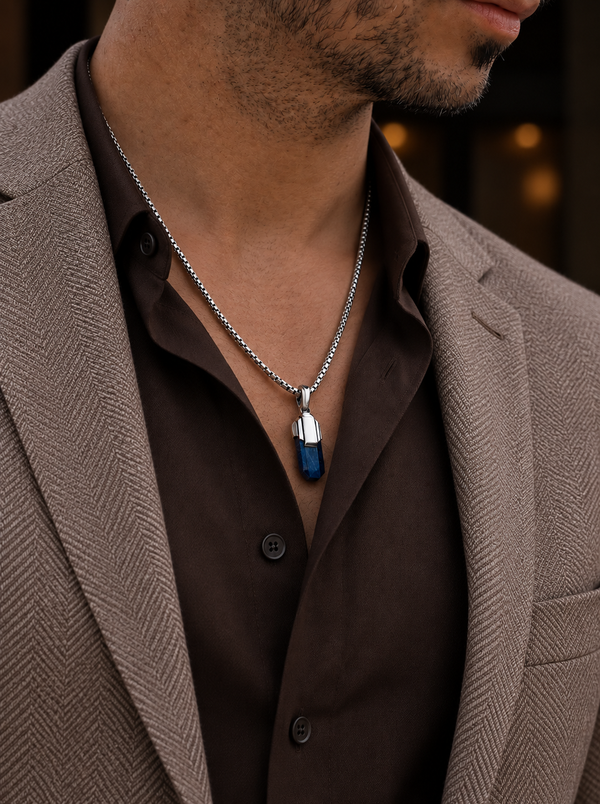
The middle habit is the one that makes the biggest difference, because perspiration sits on the chain for hours otherwise. Pieces in our men's silver pendants range benefit from the same routine, with a little extra care around the setting.
See more: Men's Chain Layering and Length Guide
Frequently Asked Questions
Why did my silver chain turn black so suddenly?
Sudden blackening means a concentrated sulphur source, not gradual tarnish. Hair products, self-tanner, chlorinated water and storage beside rubber are the usual culprits.
Does real silver turn black?
Yes. Solid sterling silver reacts with sulphur, so darkening is normal and expected. A chain that never dulls at all is more suspicious than one that does.
How do you clean a sterling silver chain that has turned black?
Start with a dry silver polishing cloth in short sections. Escalate to a barely damp cloth only if needed, and never soak the chain.
Why does my chain darken but my ring does not?
Chains have far more surface area and enclosed link faces, and they sit against perspiration on the neck rather than being washed regularly like hands.
Why is my silver chain turning black again after cleaning?
Because the source was never removed. Cleaning treats the symptom, so work through your grooming products and storage until the recurrence stops.
Is a blackened silver chain a health problem?
No. It reflects sulphur in the environment or in perspiration, not illness. Skin that becomes irritated rather than simply marked is worth raising with a doctor.
Can a jeweller fix black inside the links?
Yes. An ultrasonic clean flushes the enclosed faces that a cloth cannot reach, which is the usual reason a chain still looks dark after polishing.
Final Thoughts
A silver chain turned black is a sulphur reaction, not oxygen, not damage, and not proof of a fake. Work out how fast it happened, find what is touching it, then clean it once and change that one thing. Do that and you will not be cleaning it again next month.