To fix a broken silver chain at home, identify the break type first. An open jump ring can be closed with two pairs of flat-nose pliers in five minutes. A snapped link requires replacing with a matching sterling silver jump ring. Soldering is the only permanent fix for a snapped solid link and requires a torch and silver solder. Complex chain types such as rope or Byzantine chains need professional repair.
The repair method depends entirely on that diagnosis and the type of chain involved. Using the wrong approach on the wrong break type can make the chain harder to fix professionally later. This guide covers how to identify the break, which method applies to each situation, which chain types are not safe to repair at home, and when the cost of a professional silversmith repair is the better decision.

Diagnose the Break Before You Start
Inspect the chain under good light before touching anything. The break type determines which repair is safe to attempt at home and which requires a professional.

The key distinction is between an open jump ring, which can be closed mechanically with pliers, and a snapped link, which has fractured through the metal and needs a replacement ring or soldering. Identifying which before starting saves time and prevents further damage.
Tools You Need Before You Start
Having the correct tools before beginning prevents the most common home repair mistake, which is gripping the silver with serrated pliers and leaving marks that are difficult to remove. For a jump ring repair, the only tools required are two pairs of smooth flat-nose or needle-nose pliers and a replacement sterling silver jump ring that matches the original link in diameter and wire gauge. For a clasp replacement, add a new lobster or box clasp in sterling silver. Good lighting and a clean flat surface are as important as the pliers: the links on most men's chains are small enough that poor visibility leads to misalignment and further distortion.
Method 1: Closing an Open Jump Ring
The most common home repair and the most accessible. If the break is an open jump ring, the repair is mechanical and takes five minutes with no soldering required.
Step by Step
Grip each side of the gap with a pair of flat-nose pliers and twist the ends toward each other: one plier slightly forward, the other slightly back. Do not pull them apart laterally: this distorts the ring. Twist until the ends meet flush with no visible gap, then test by pulling the chain gently in both directions.
Common Mistakes to Avoid
Serrated pliers leave permanent grip marks. Pulling the ends laterally distorts the ring circle. A visible seam gap allows the ring to reopen under wear. If the link is too small to grip safely, take the chain to a silversmith.
After the repair, clean the chain to remove fingerprints and handling tarnish. See our guide on how to clean a sterling silver chain for the right method.

Method 2: Replacing a Jump Ring for a Snapped Link
When a link has snapped through the metal rather than opened at a seam, it cannot be reused. A replacement jump ring reconnects the two chain ends.
Match the replacement ring to the original link in diameter and wire gauge as closely as possible. Never use a ring from a different metal type, as dissimilar metals at the join accelerate tarnishing. Open the replacement ring using the twist method, thread both chain ends onto it, and close. The closed seam is the weakest point in the repair: consider professional soldering if the chain is worn daily.
Method 3: When Soldering Is the Right Answer
When a jump ring replacement is not enough to fix broken silver chain properly, soldering is the only permanent repair for a snapped link. A jump ring replacement is a mechanical fix that works under normal wear but is not as strong as the original chain at that point. Soldering fuses the metal with heat and silver solder, producing a join that is structurally equivalent to the surrounding chain.
A home solder repair on a silver chain requires a jeweller's micro-torch or a butane torch, easy-flow silver solder, silver flux, pickle solution, cross-locking tweezers, and a soldering block. The process involves cleaning the break point, applying flux to prevent oxidation, positioning the chain ends in contact, heating the link until the solder flows into the join, quenching, and pickling to remove surface oxidation. Incorrect heat application will anneal and weaken the links adjacent to the repair, or in the case of fine chains, melt them entirely. For most men with a broken solid 925 sterling silver chain, a professional solder repair from a local silversmith at £25 to £45 is a more reliable outcome than a first-attempt home solder. The cost is low relative to the risk of further damage.
Shop now: Men's Silver Chains
Chain Type Affects What Is Repairable at Home
A cable chain and a rope chain can look similar but behave completely differently when broken.

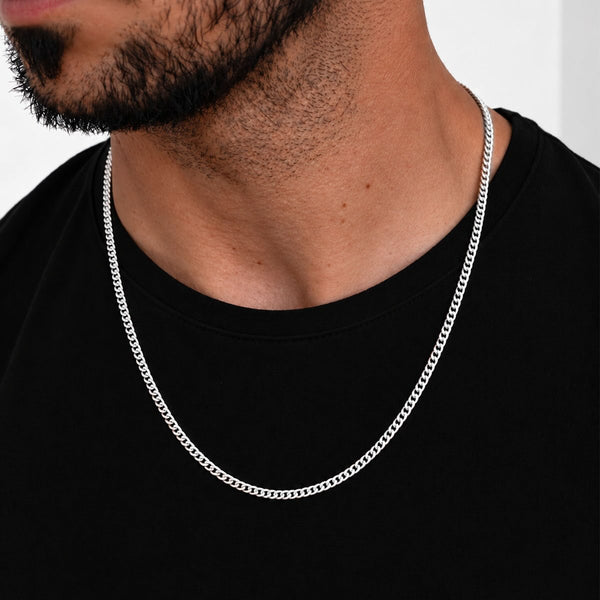
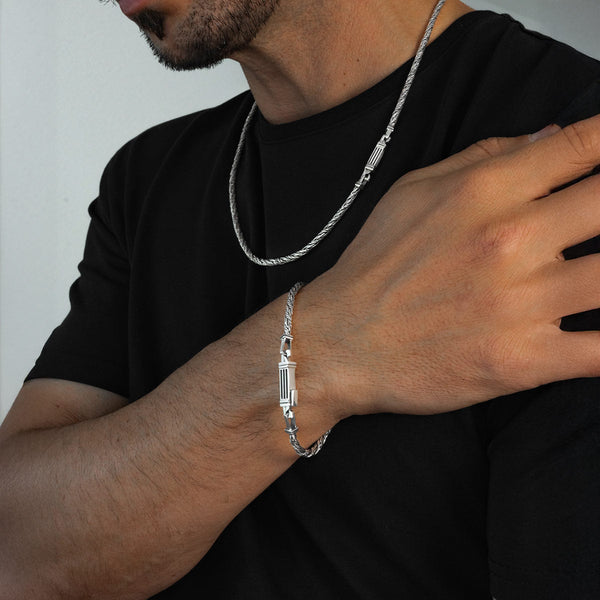
Cable, box, and Figaro chains suit home repair. Rope, Byzantine, and snake chains require a professional silversmith for anything beyond a clasp replacement.
For a full explanation of how different link structures behave in wear and why some are more complex to work with, read our guide on men's chain layering and link types.
Why Superglue Is Not a Solution
Superglue forms a brittle bond that fails within hours of normal wear from the flex stress of the chain moving. The more significant problem is residue: dried superglue on sterling silver must be chemically removed before any solder repair, turning a £30 job into an £80 one. Epoxy causes the same issue. No adhesive is a substitute for mechanical or solder repair.
When to Take the Chain to a Jeweller
Take the chain to a professional if the chain type is a rope, Byzantine, or snake chain; if the break involves multiple links; if the chain has sentimental or significant financial value; if the break is within 3cm of the clasp or pendant bail; or if the chain is silver-plated rather than solid 925 sterling silver, in which case assess whether repair cost is justified against replacement cost.
Jump ring or clasp replacement, £10 to £20; solder repair on sterling silver, £25 to £45; complex repairs, £50 and above. Always ask for a firm quote before leaving the piece. A local silversmith is more reliable than a high street chain, which often subcontracts work and extends turnaround time.
For more on maintaining a solid 925 sterling silver chain to reduce the likelihood of future breaks, read our guide on men's silver jewellery trends and care.
How to Prevent a Silver Chain from Breaking
The clasp jump ring is the most common break point: inspect it monthly and pull gently in both directions to check for looseness. Store the chain flat or hanging rather than coiled, as coiling creates stress kinks that fatigue the metal over time. Remove it before sleeping. For chains worn with a pendant, ensure the chain width suits the pendant weight so the bail does not concentrate load on a single link.
For guidance on matching chain length and width to your build to reduce mechanical stress during daily wear, see the men's chain size chart.

Frequently Asked Questions
Can you fix a broken silver chain at home?
Yes, for simple breaks. An open jump ring closes with flat-nose pliers in five minutes. A snapped single link can be replaced with a matching sterling silver jump ring. Rope, Byzantine, and snake chains are not suitable for home repair and need a professional silversmith.
What tools do I need to fix a broken silver chain at home?
Two pairs of smooth flat-nose or needle-nose pliers and a replacement sterling silver jump ring matching the original link size. Serrated pliers will mark the silver. Good lighting and a clean flat surface are equally important. No soldering equipment is needed for a jump ring repair.
Can I use superglue to fix a broken silver chain?
No. Superglue forms a brittle bond that fails under the flex stress of normal wear. The residue bonds to the silver surface and must be chemically removed before a professional solder repair, increasing the repair cost significantly. No adhesive is a substitute for a mechanical or soldered repair on a silver chain.
How much does it cost to get a silver chain repaired professionally in the UK?
A jump ring or clasp replacement typically costs £10 to £20. A solder repair on sterling silver costs £25 to £45. Complex repairs or multiple breaks cost £50 or more. Always ask for a firm quote before leaving the chain. Turnaround time at a local silversmith is usually one to five business days.
When should I take a broken silver chain to a jeweller rather than fixing it at home?
Take it to a professional if the chain is a rope, Byzantine, or snake type; if multiple links are broken; if the break is within 3cm of the clasp or bail; or if the sentimental or financial value of the piece makes the risk of a DIY error unacceptable.
Diagnose First, Then Repair
Not every broken silver chain needs a jeweller. And not every break can be fixed at home. The distinction is in the type. An open jump ring: five minutes with two pairs of pliers. A snapped cable link: ten minutes and a replacement ring. A rope chain: a silversmith. Knowing which before you start protects the chain and produces a repair that holds.