Choosing the best chain for pendants is not just about finding the right metal or length. The chain type determines how your pendant hangs, whether it stays centred, how much it moves, and whether the bail will hold under daily wear. Get the combination right and the pendant becomes the focal point. Get it wrong and even a quality piece looks accidental. This guide covers every variable you need to decide.

Why Chain Type Matters for Pendant Wear
A chain is not simply a delivery mechanism for a pendant. Its structure, weight, and link design directly affect the pendant's behaviour throughout the day. A flexible cable chain allows a pendant to spin freely, often ending up face-backwards after a few hours. A rigid box chain keeps the pendant face-forward throughout normal movement. A thin chain under a heavy pendant will kink at the bail point and weaken over time. Choosing the best type of chain for pendants starts with understanding these physical relationships, not just the aesthetic ones.
Best Chain for Pendants: Matched by Pendant Weight
Pendant weight is the most important practical factor in chain selection and the one most often ignored. The chain must support the pendant's weight at a single point, the bail, while also handling the pendulum motion created by daily movement. The table below maps pendant weight to the best chain type, with NineTwoFive's specific chain options.

The table shows that lighter pendants give you more flexibility in chain choice, while heavier pieces require structural priority over aesthetics. NineTwoFive pendants range from 6g for the stone-set Art Deco pieces to 8g for the plain Jamil, placing most of them in the 3mm box chain range as the best starting point.
Best Type of Chain for Pendants: Each Style Explained
The four main chain types for men divide broadly into two structural categories: rigid-link chains that hold the pendant stable, and flexible-link chains that allow movement. Both have their place, and understanding each one makes the choice straightforward rather than a matter of guesswork.
Box Chain: Best All-Round Chain for Pendants
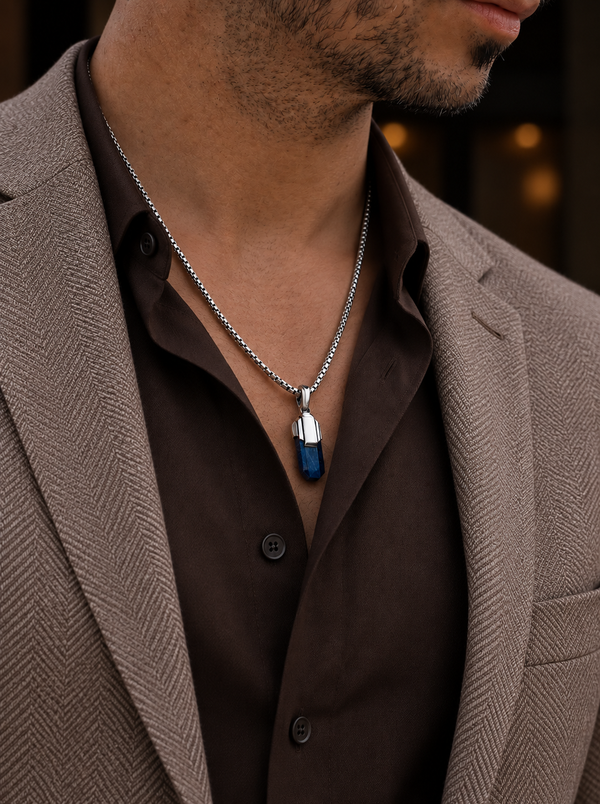
The box chain is constructed from square links connected at right angles to each other. This rigid structure is what makes it the best chain for pendants in most situations. The square links do not flex the way round or oval links do, which prevents the pendant from rotating freely on the chain. The pendant stays centred and face-forward throughout normal daily movement rather than drifting sideways under a collar.
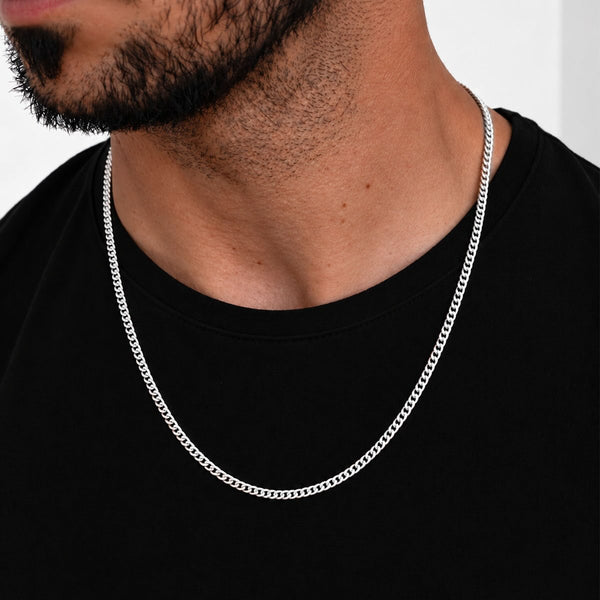
NineTwoFive's Kamal is a 3mm Venetian box chain in solid 925 sterling silver. The Venetian construction is a refined variation on the standard box chain, with slightly elongated links that give the chain a cleaner surface profile while maintaining the same structural rigidity. At 3mm, it handles pendant weights from 5g to 12g without distortion and passes through NineTwoFive's 5mm pendant bail loops without resistance.
The Kamal is available in 50cm, 55cm, and 60cm lengths. For help choosing the right length for your build and the pendant you have in mind, use our men's chain size chart.

Rope Chain: Best for Heavier Pendants
The rope chain is constructed from small links twisted together in a spiral pattern. This twisted structure distributes tensile load across multiple link contact points rather than concentrating it at a single join, which makes it the strongest chain type for pendant wear under weight. A rope chain carries pendant loads that would distort a cable chain and handles daily movement without stretching or flattening over time.
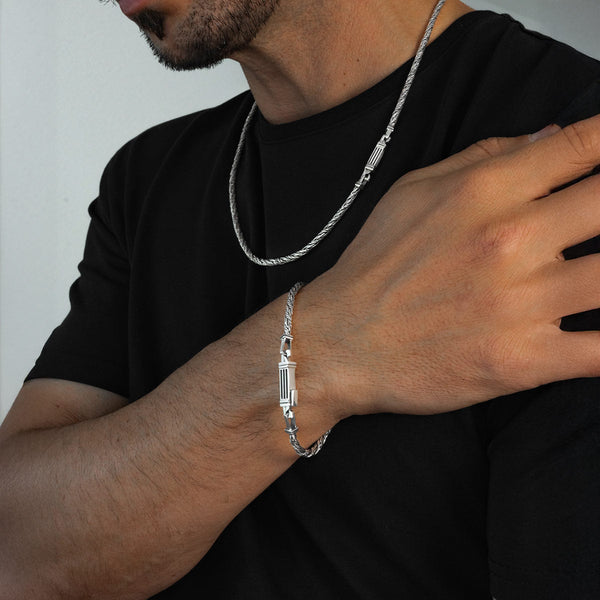
NineTwoFive's Nadir is a 3mm twisted rope chain in solid 925 sterling silver, available in the same lengths as the Kamal. At 3mm it is strong enough for heavier pendant weights, including the Art Deco layered pieces like the Tahsin and Tahrir. The rope's twisted surface also adds visual texture that complements pendants with more complex designs or natural stone settings.
Minimalist Chain: Best for Lightweight Pendants
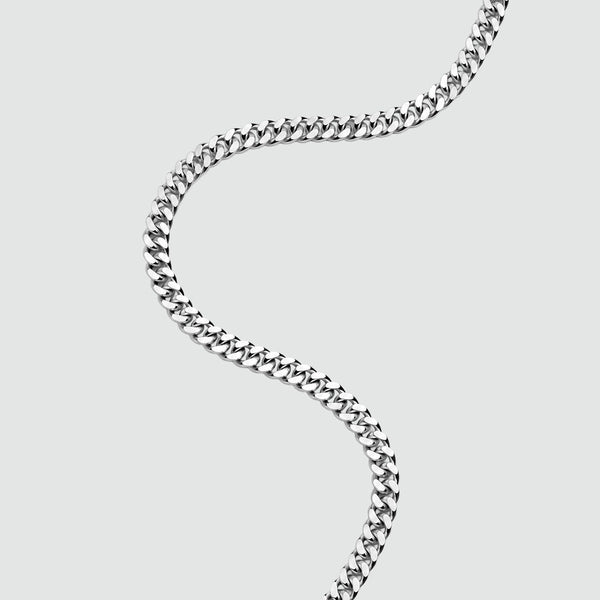
NineTwoFive's Emir is a 2.5mm minimalist chain with a slim, high-polished finish and a clean link profile. At this width, it is suited to lightweight pendants under 6g, where its subtlety allows the pendant to remain the sole visual focus. The Emir works particularly well with the Jamil plain pendant for men who want the pendant to read as floating rather than prominently framed. For pendants above 6g, upgrading to the Kamal box chain at 3mm provides the structural support the Emir's slim links cannot offer.
Byzantine Chain: Best Worn Alone, Can Support Bold Pendants
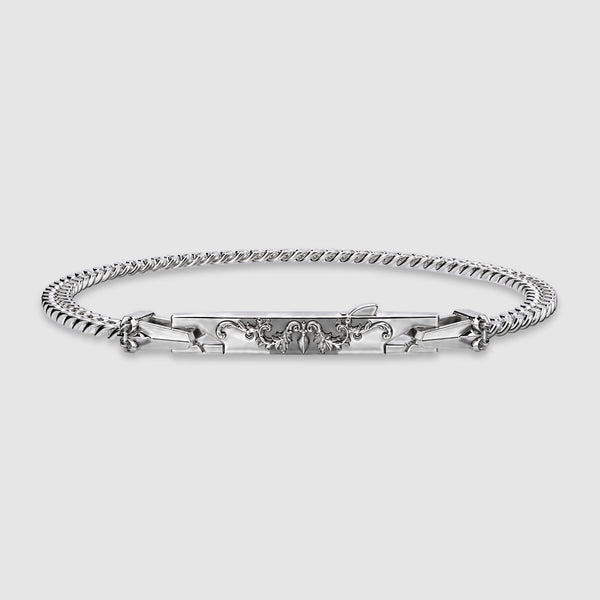
NineTwoFive's Ramsi is a 3.5mm Byzantine chain with a complex interlocked weave pattern inspired by classical chain architecture. The Byzantine weave has the visual presence to stand alone as a statement piece without any pendant, which is its primary purpose. For men who want to add a bold or substantial pendant to it, the Ramsi's 3.5mm width and interlocked structure can carry the weight, but the chain's own visual character will share attention with the pendant rather than deferring to it. It is best used without a pendant or with the most substantial statement pieces where the combination is deliberately bold.
Shop now: Shop All Men's Silver Chains
Matching Chain Design to Pendant Design
Beyond structural suitability, the chain's design language should complement the pendant's character. Wearing an architectural geometric pendant on a heavily textured chain creates visual conflict; wearing it on a clean box chain creates coherence. The table below maps NineTwoFive's pendant range to the chain that best serves each design.

The consistent principle across all combinations is that the chain's job is to support the pendant, not to compete with it. The only exception is the Ramsi Byzantine, which has sufficient design character to share the visual space with a bold pendant. In every other pairing, choosing the less visually complex chain produces the cleaner, more intentional result.
For more on how current chain and pendant trends are developing in men's silver jewellery, read our guide on men's silver jewellery trends.
Bail Diameter and Chain Width Compatibility
The bail is the loop at the top of the pendant through which the chain passes. If the chain width is greater than the bail's internal diameter, the chain cannot pass through it. This is a practical constraint that applies before any aesthetic consideration and is the most common source of pendant and chain incompatibility when buying the two separately.
NineTwoFive pendants have a 5mm internal bail loop. This accommodates chains up to approximately 4mm in width comfortably. The Emir at 2.5mm, the Kamal and Nadir at 3mm, and the Ramsi at 3.5mm all pass through the 5mm bail without resistance. A 5mm or wider curb chain would not, and attempting to thread it through would damage the bail loop. When buying a chain for an existing pendant, measure the bail's internal diameter first and confirm the chain width is at least 1mm narrower.

Best Chain for Pendant by Occasion
The right chain for your pendant also depends on where and how you are wearing it. The same pendant can read very differently depending on chain length and type, and calibrating that to the occasion produces a more considered overall look.

The pattern across occasions is consistent: the more formal the setting, the shorter the chain, the slimmer the width, and the more the pendant should remain close to the collarbone rather than hanging prominently at mid-chest. The Kamal box chain at 50cm is the most versatile option across the widest range of contexts.
For a full guide to layering chains and managing length across different outfits and occasions, read our men's chain layering guide.
Shop now: Men's Silver Pendants
Frequently Asked Questions
What is the best chain for pendants?
For most men's pendants, a 3mm box chain is the best all-round choice. Its rigid square links keep the pendant centred and face-forward throughout daily movement. NineTwoFive's Kamal Venetian Box Chain handles pendant weights from 5g to 12g and pairs with all bail sizes of 3mm or wider.
What chain is best for a heavy pendant?
A rope chain handles heavier pendants better than a box or cable chain. The twisted structure distributes load across multiple contact points rather than concentrating it at the bail join. NineTwoFive's Nadir at 3mm carries pendant weights up to 15g without stretching or distortion over time.
Can I use any chain with any pendant?
No. The chain must pass through the pendant's bail loop, so chain width cannot exceed the bail's internal diameter. NineTwoFive's 5mm pendant bail accommodates chains up to 4mm. Chain strength must also match pendant weight; a 2mm cable chain under a 12g pendant will kink at the bail over time.
Why does my pendant keep spinning on the chain?
Pendant spinning is caused by using a flexible chain such as a cable or thin rope chain, which allows the pendant to rotate freely. Switching to a rigid box chain prevents this. NineTwoFive's Kamal box chain holds pendants face-forward due to its square rigid links, which resist rotation throughout daily wear.
Which NineTwoFive chain works best with pendants?
The Kamal Venetian Box Chain at 3mm is the best starting point for most NineTwoFive pendants, including the Jamil, Tahsin, and Jalil. For heavier Art Deco stone-set pieces, the Nadir Twisted Rope Chain at 3mm provides additional tensile support. The Emir at 2.5mm suits lightweight bar or disc pendants only.
Start with Weight, Finish with Design
Choosing the best chain for pendants comes down to two decisions made in order: match the chain's structural strength to the pendant's weight, then match the chain's design language to the pendant's character. For most men's pendants, the Kamal box chain resolves both decisions cleanly. For heavier pieces, the Nadir rope chain provides the additional support. Start with those two and the rest follows.
For guidance on keeping your chain in good condition over time, read our guide on how to clean a silver chain.