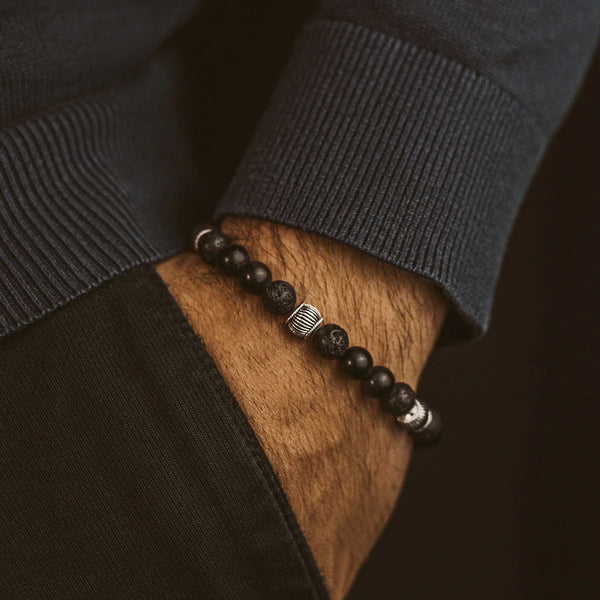
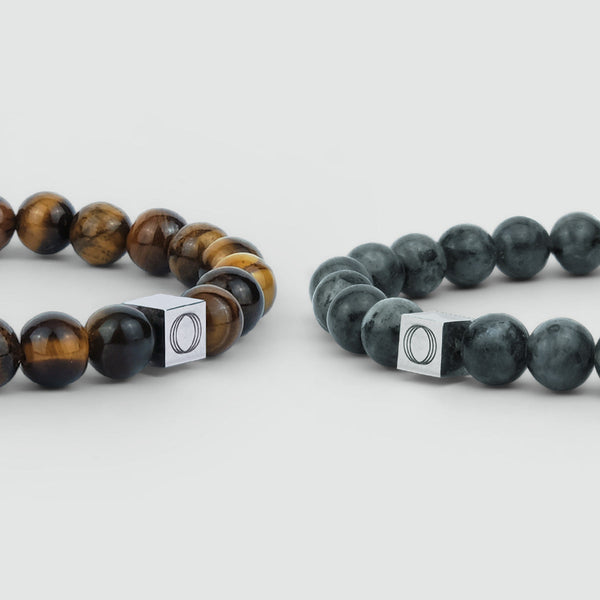
To tighten a beaded bracelet, the method depends on how it is strung. For elastic cord bracelets, remove one or two beads and retie the knot with an extra half-hitch. For knotted cord bracelets, slide the existing knots closer together using a pin. For adjustable sliding-knot bracelets, simply pull the cord ends to reduce the loop size.
A beaded bracelet that has become too loose is a common problem, and learning how to tighten a beaded bracelet correctly is one of the most straightforward fixes available, provided you know which construction type you are dealing with. Elastic cord, knotted cord, wire-strung, and adjustable sliding-knot bracelets all loosen differently, and knowing how to tighten a beaded bracelet correctly means knowing which type you have. This guide covers all four, with step-by-step instructions for each construction type and a practical decision guide for when tightening is no longer enough.

Why Beaded Bracelets Get Loose Over Time
Understanding why a beaded bracelet loosens helps you choose the right fix and avoid the same problem recurring too quickly. The cause varies by construction, and in some cases what looks like a tightening issue is actually a sign that the bracelet needs to be restrung entirely rather than adjusted.
Elastic Cord Fatigue
Elastic cord is the most common stringing material used in beaded bracelets for men, particularly those with natural stone beads. It offers a comfortable, clasp-free fit but degrades over time through a process called elastic fatigue. Every stretch and return cycle weakens the material slightly. Exposure to moisture from sweat and water, skin oils, UV light from sunlight, and chemical contact from perfumes and cleaning products all accelerate this process. A bracelet worn daily will typically show meaningful cord degradation within one to two years, depending on activity level and care habits. The first sign is usually that the bracelet sits lower on the wrist than it used to. At this stage, how to tighten a beaded bracelet is still a viable solution. The final sign is that the cord snaps without warning.
Knot Loosening on Cord Bracelets
On bracelets strung with non-elastic cord and knotted between beads, the knots themselves loosen over time through movement during wear. Heavier stone beads accelerate this process because their weight places more tension on each knot. Once a knot loosens, the beads have more room to move, which allows adjacent knots to loosen further. The loosening process tends to accelerate once it starts. On a bracelet with genuinely solid knots that have been well-tied from the start, how to tighten a beaded bracelet of this type is rarely needed for the first two years. On one with rushed knots or cord that is slightly too thin for the bead holes, it can happen within months.
Adjustable Bracelet Slip
Adjustable bracelets use a sliding-knot mechanism that allows the wearer to change the loop size by pulling the cord ends. Over time, particularly with repeated adjustment, the sliding knot can loosen and allow the loop to expand beyond its intended minimum size. This is the simplest how to tighten a beaded bracelet problem to fix and the most straightforward to identify: the bracelet does not return to its tightest position when the cords are pulled.
See more: Men's Beaded Bracelets with Meaning: A Stone-by-Stone Guide
How to Tighten a Beaded Bracelet by Type
The right method to use when you want to know how to tighten a beaded bracelet depends entirely on how it is constructed. Applying the wrong technique wastes time and risks damaging the bracelet further. The table below matches each bracelet type to the correct tightening approach, the difficulty involved, the tools required, and the point at which restringing becomes the better option.

The adjustable sliding-knot bracelet is by far the easiest to address when you need to know how to tighten a beaded bracelet and requires no tools at all. Elastic cord bracelets are the most commonly worn type and the most frequently loosened, but tightening them is still manageable at home with basic materials. Wire-strung bracelets are the only type that requires a specialist tool to adjust correctly.
How to Tighten an Elastic Cord Beaded Bracelet
This is the most commonly needed fix for anyone learning how to tighten a beaded bracelet. Before starting, check the cord carefully for signs of fatigue: if it looks chalky, feels sticky, or has any visible cracks, tightening it will not provide a lasting result and restringing is the better choice. If the cord looks intact, the following steps show exactly how to tighten a beaded bracelet on elastic cord.
1. Lay the bracelet flat and count the beads. Note the total so you can return them in the correct order after removing some.
2. Locate the existing knot. On most elastic beaded bracelets the knot sits inside a bead hole, hidden from view. Gently stretch the bracelet to find where the ends are tucked.
3. Untie the knot carefully. Pull the cord ends free and remove one or two beads from the bracelet to create enough slack to retie with a tighter fit.
4. Thread the cord ends together and tie a surgeon's knot: cross one end over the other twice, then cross the shorter end back through the loop twice in the opposite direction. Pull firmly.
5. Test the fit on your wrist before trimming. The bracelet should sit comfortably without slipping past the knuckles during removal. If still too loose, remove one more bead and repeat. Once satisfied, trim the cord ends close to the knot and apply a small drop of jewellery glue or clear nail varnish to seal the knot. Tuck it inside the nearest bead hole.
How to Tighten a Knotted Cord Beaded Bracelet
On a knotted cord bracelet, how to tighten a beaded bracelet is different from the elastic method. The beads are separated by individual knots, and tightening does not require removing any beads. Instead, the existing knots are pushed closer together to reduce the overall length of the bracelet.
1. Hold the bracelet taut between two fingers and identify which section feels loosest. This is usually where the knots have migrated furthest apart.
2. Use a pin, toothpick, or awl to work the knot along the cord toward the bead on one side. Apply steady, gentle pressure rather than forcing it.
3. Repeat for each loose section in turn, working systematically around the bracelet rather than jumping between sections.
4. Once the knots have been repositioned, test the fit. If the bracelet is now slightly too tight, ease one or two knots back slightly to find the correct balance.
5. Apply a small drop of clear jewellery glue to each repositioned knot to hold it in place. Allow to dry fully before wearing.

How to Tighten an Adjustable Sliding-Knot Beaded Bracelet
Adjustable bracelets have two cord ends that pass through a sliding knot mechanism, allowing the loop size to be changed by pulling the free ends. To tighten the bracelet, hold both beaded sections in each hand and pull the free cord ends away from each other simultaneously. This is how to tighten a beaded bracelet on a sliding-knot mechanism. The loop will reduce in size.
If the sliding mechanism no longer moves smoothly or if pulling the ends does not reduce the loop consistently, the sliding knot itself has worn and the bracelet needs to be re-knotted or replaced. At NineTwoFive, all adjustable bracelets are designed to be adjusted without tools and without risk of damaging the cord.
See more: Does Silver Tarnish? Men's Bracelet and Chain Care Explained
When to Repair vs. When to Restring
Knowing how to tighten a beaded bracelet is only useful when the underlying cord or stringing material is still in good condition. Attempting to tighten a bracelet on failing elastic or worn cord creates a false sense of security and increases the risk of the bracelet snapping during wear, often when the beads are over water or in a location where losing them would mean losing them permanently.
Signs the Elastic Needs Replacing, Not Tightening
Knowing how to tighten a beaded bracelet is only useful while the cord is still sound. A bracelet on elastic cord needs restringing when the cord shows any of the following: a chalky or whitish surface where the cord emerges from the bead holes; a sticky or tacky texture when touched; visible micro-cracks along the cord surface; or a tendency to stretch and not return to its original length consistently. A bracelet that has already been tightened twice by removing beads is also reaching the point where restringing makes more sense than further adjustment. Each restringing removes fewer beads and starts from a full length of fresh cord.
How to Restring a Beaded Bracelet
Restringing involves removing all the beads onto a bead mat or tray in order, measuring a length of fresh cord against your wrist with 15 to 20 centimetres of additional length for tying, and threading the beads back onto the new cord in the original sequence. Finish with a surgeon's knot sealed with jewellery glue and tucked inside a bead hole. For natural stone beaded bracelets with heavier beads, use elastic cord rated for at least 0.8mm diameter. This ensures the knot holds under the weight and reduces how often you need to know how to tighten a beaded bracelet again.
If you are considering a replacement rather than a repair, explore the full range of men's stone beaded bracelets at Men's Beaded Bracelets, all strung on high-quality elastic and built for daily wear.

Keeping Your Beaded Bracelet the Right Size
Most beaded bracelet loosening is preventable. Understanding the right fit from the start reduces the likelihood of needing to know how to tighten a beaded bracelet repeatedly.
How to Store Beaded Bracelets
Elastic cord degrades fastest when exposed to heat, UV light, and repeated stretching, which is why how to tighten a beaded bracelet becomes a more frequent task for bracelets left on jewellery stands in sunlight. Storing beaded bracelets in a cool, dry drawer rather than on a jewellery stand in direct light significantly extends the life of the cord. Avoid storing natural stone beaded bracelets tangled with heavier jewellery, as the weight and movement can stress the cord even when the bracelet is not being worn. A small pouch or divided jewellery tray is the most practical storage option for daily-wear bracelets.
How to Measure for the Right Fit Before Buying
A beaded bracelet that fits correctly from the start will loosen more slowly, meaning how to tighten a beaded bracelet is a less frequent task overall. NineTwoFive bracelets include sizing guidance in the product descriptions, and the ring size tools page can help with general fit questions. The correct fit for a men's beaded bracelet allows the bracelet to move slightly on the wrist without sliding past the knuckle during natural hand movements.
Measure the wrist at its widest point and add 1 to 1.5 centimetres for a comfortable fit with natural stone beads. Adding more than 1.5 centimetres to the wrist measurement will result in a bracelet that sits too low on the hand rather than at the wrist, which accelerates loosening.
Need a more precise fit? NineTwoFive offers free custom sizing, so you can request your bracelet in the size that feels most comfortable.
See more: Silver Bracelet for Men 2025: Style and Care Guide

FAQ: How to Tighten a Beaded Bracelet
How to tighten beaded bracelet without removing any beads: is it possible?
Yes, on knotted cord and adjustable bracelets. For knotted cord bracelets, use a pin to slide the knots closer together without removing any beads. For adjustable bracelets, pull the cord ends to reduce the loop. Only elastic cord bracelets require removing one or two beads to create enough slack to retie the knot.
How do I identify the type before I learn how to tighten a beaded bracelet?
Stretch the bracelet gently between two fingers. If it stretches noticeably and returns to its original shape, it is strung on elastic cord. If it has very little stretch and you can see small knots between the beads, it is knotted cord. Adjustable bracelets will have two loose cord ends extending from the sides of the bracelet.
How to tighten beaded bracelet on elastic: how often does it need doing?
A well-made elastic beaded bracelet worn daily typically needs tightening after twelve to eighteen months. If it needs tightening more frequently than once a year, the elastic may already be fatigued and restringing with fresh cord will give better results than repeated tightening.
Can I use regular superglue to seal the knot on a beaded bracelet?
Standard superglue will work but becomes brittle over time and may not flex well with the cord during wear. A purpose-made jewellery glue or clear-drying flexible adhesive gives a stronger, more durable result. Clear nail varnish is a widely available alternative that works reasonably well for a short-term seal.
What is the best knot when learning how to tighten a beaded bracelet on elastic cord?
A surgeon's knot is the most reliable choice for tightening a beaded bracelet on elastic cord. It grips more securely than a standard square knot and resists loosening under repeated stretching. Tie it as close to the final bead as possible, seal with glue, and tuck the trimmed ends inside the nearest bead hole.
Final Thoughts
Knowing how to tighten a beaded bracelet correctly, and recognising when tightening is no longer enough, keeps a bracelet wearable for significantly longer. The method depends on the construction, the tools are minimal, and the process takes less than fifteen minutes in most cases. If the cord has reached the end of its life, restringing is a straightforward refresh. And if you are looking for a replacement that is built to hold its fit through daily wear, explore the full range at Men's Beaded Bracelets, each strung on durable elastic and designed to last.