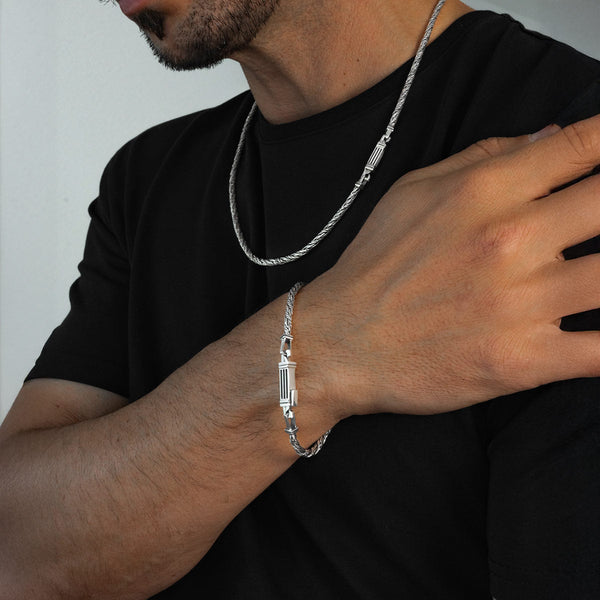
To clean a silver chain with aluminium foil, line a bowl with foil shiny side up, add hot tap water (not boiling) and one tablespoon of bicarbonate of soda per cup of water, then lay the chain on the foil. Leave for three to five minutes depending on tarnish level. Rinse very thoroughly under lukewarm water to clear bicarbonate from inside the links, and dry immediately with a lint-free cloth.
The aluminium foil method (also searched as the aluminum foil method) is one of the fastest ways to remove tarnish from a sterling silver chain at home with no specialist products. It works through a specific electrochemical reaction rather than abrasion, which means it restores the silver surface rather than wearing it away. This guide covers the correct steps for a chain specifically, the right temperature to protect the clasp, what to check before starting, and the situations where this method should not be used.

Why the Aluminium Foil Method Works on Silver
Silver tarnishes when it reacts with sulphur in the air, forming silver sulphide on the surface. The aluminium foil method creates a galvanic cell: when aluminium, silver, and bicarbonate of soda solution are in contact, electrons flow from the aluminium to the silver, converting silver sulphide back to pure silver and transferring the sulphur to the foil. This is why the foil turns dark while the chain brightens. No silver is removed in the process, unlike abrasive polishes which remove a thin layer of metal with each use.
Before You Start: Two Things to Check
Is the Chain Solid 925 or Silver-Plated?
Solid 925 sterling silver is safe for the foil method. A silver-plated chain is not: the galvanic current can lift thin plating at any point where it is already weak. Intentionally oxidised or blackened silver should also be avoided: the galvanic reaction strips oxidised finishes and blackened clasp details, which are part of the design. If the chain has an oxidised or blackened component, use a polishing cloth on the bright sections only. Check for a 925 hallmark on the clasp or an inner link. If there is no 925 marking, use a polishing cloth instead.
Does the Chain Have a Pendant or Other Materials?
A plain silver chain is completely safe. If the chain has a pendant with stones, enamel, or pearl, remove it first. Heat and bicarbonate solution can loosen adhesive-set stones, damage soft materials such as turquoise or opal, and discolour enamel. Clean the chain alone, then reattach.
What You Need
A bowl large enough to submerge the full length of the chain flat. Aluminium foil. Bicarbonate of soda: one tablespoon per cup of water. Hot water from the tap. A lint-free cloth for drying. A soft toothbrush for clearing residue from the links after rinsing. A silver polishing cloth to finish and restore surface shine.

Step-by-Step: How to Clean a Silver Chain with Aluminium Foil
The steps below are specific to cleaning a chain rather than silverware or flatware. The key differences are the temperature of the water (hot tap, not boiling) and the rinse step, which must be thorough enough to clear bicarbonate from inside the link structure.
Step 1. Line the bowl with aluminium foil, shiny side facing up, with enough coverage for the chain to lie flat in contact with the surface.
Step 2. Add hot water from the tap. The water should be hot enough to feel uncomfortable on the hand but not boiling. Boiling water can stress the spring mechanism inside lobster and box clasps with repeated use. Hot tap water produces the same electrochemical result without the clasp risk.
Step 3. Add one tablespoon of bicarbonate of soda per cup of water. The solution will fizz; this is normal.
Step 4. Lay the chain flat so each link section rests in contact with the foil. Do not coil the chain over itself. Sections that do not touch the foil will not be cleaned by the galvanic reaction.
Step 5. Leave the chain in the solution according to the tarnish level in the table below. For very heavy tarnish, check every two minutes by lifting one end of the chain to observe progress. Remove when the visible tarnish has been lifted.
Step 6. Remove the chain and rinse thoroughly under lukewarm running water. Bicarbonate solution can become trapped inside link interiors: residue that dries in the links produces a white haze that looks like remaining tarnish.

For very heavy tarnish, a second session is more effective than an extended single soak. The timing applies to solid 925 sterling silver.
Chain-Specific Care After the Foil Method
Two steps after the foil method produce a better result than rinsing and drying alone.
After rinsing, use a soft toothbrush along the length of the chain, working the bristles between the links in both directions. This clears any residue trapped in the link interiors that water alone may not have reached. Rinse again after brushing. Dry immediately and completely with a lint-free cloth, paying attention to the clasp mechanism where moisture can sit if left.
Once fully dry, run a silver polishing cloth along the length of the chain. The foil method removes the tarnish layer from the surface; the polishing cloth restores the full mirror shine and provides a thin anti-tarnish layer that slows the return of tarnish between cleaning sessions.
For a full guide on all cleaning methods for sterling silver chains, including options for different tarnish levels, read our guide on how to clean a sterling silver chain.
When Not to Use the Aluminium Foil Method on a Silver Chain
The foil method is effective for solid 925 sterling silver chains without attached components. Several chain types and situations make this method unsuitable or risky, and using it in those cases can cause damage that is difficult or impossible to reverse.

The most common mistake is using the method on a plated chain. Plated chains carry stamps such as EP, EPNS, or Silver Tone rather than 925. If in doubt, use a polishing cloth only.
For more on why sterling silver tarnishes and how to identify whether a chain is solid 925 or plated, read our guide on tarnishing and sterling silver.
Aluminium Foil Method vs. Other Cleaning Methods
The foil method is the most effective home approach for medium to heavy tarnish on a solid silver chain. The comparison below shows where it sits relative to the other methods most commonly used for silver chain cleaning, to help decide when to use which.

Use the polishing cloth for light dulling and regular maintenance. Use the foil method when visible brown discolouration is already present and the cloth alone is not sufficient.
Shop now: Men's Silver Chains
How Often to Use the Foil Method on a Silver Chain
The foil method is for medium to heavy tarnish removal, not everyday maintenance. For a chain worn daily, it should be needed no more than every two to three months when supplemented by a polishing cloth wipe after each wear. A weekly cloth wipe reduces how often a deeper clean is necessary.
For guidance on how to layer silver chains and which lengths suit different builds, including how regular wear affects maintenance needs, read our men's chain layering guide.
Frequently Asked Questions
Does the aluminium foil method work on silver chains?
Yes, for solid 925 sterling silver chains without pendants or other attached materials. The galvanic reaction removes silver sulphide tarnish in three to ten minutes. It does not work on plated chains and can lift thin plating at weak points.
Should I use boiling water or hot water for the aluminium foil method?
Hot tap water, not boiling. Boiling water carries a risk of stressing the spring mechanism inside chain clasps over repeated use. Hot tap water is sufficient to drive the galvanic reaction.
Can I clean a silver chain with a pendant attached using the foil method?
Only if the pendant is plain sterling silver with no stones, enamel, or organic materials. Remove any pendant with stones, enamel, or pearl before using the foil method. Heat and bicarbonate solution can loosen adhesive-set stones, damage porous materials, and discolour enamel. Clean the chain alone, then reattach.
Why does my silver chain still look dull after the foil method?
Either bicarbonate residue dried inside the link interiors, which appears as a white haze, or the chain needs a polishing cloth after the foil method to restore the surface shine. Rinse again with a toothbrush working between the links, dry completely, and finish with a silver polishing cloth.
How often should I clean a silver chain with the aluminium foil method?
Every two to three months for a chain worn daily, if maintained with a polishing cloth between deeper cleans. For a chain stored for long periods or worn without regular maintenance, use when visible brown discolouration appears. The foil method is for tarnish removal, not routine upkeep.
Fast, Effective, and Chain-Specific
The aluminium foil method removes tarnish from solid 925 sterling silver chains in under ten minutes with no specialist products. Hot tap water not boiling, chain flat on the foil, thorough rinsing, polishing cloth to finish. Check the hallmark before starting, remove any pendant with stones, and it works reliably every time.
For guidance on choosing the right chain length for your build and how different chain types wear over time, see our men's chain size chart.